Turkey and mushroom sausage recipe. Make it as meatballs for your next holiday buffet.
November is in the air yo, and that means it's time to dust of those old copies of Gourmet magazine and find granny's favorite recipe for green bean casserole. But how about something different? Have you ever wondered if you could capture the flavors of Thanksgiving in a sausage? Dude I have. I started imagining everything stuffed in a casing, potatoes, dressing, greens, gravy...My mom suggested dried cranberries, but why not sauce Ma? Thanksgiving is THE All-American holiday and what's more American than using a little innovation to cram dinner into a neat easy to eat tube? While I didn't manage to get the entire meal into one sausage, I think I have come up with something that works. Let's take a look at the ingredients.
The Turkey
Don't get me started on turkey. I am a fan of buying from local producer, but in the end I don't care where you get it. Walking to the supermarket to buy your turkey (take a wagon) counts as buying local. The magic of a meal should happen in the kitchen not where you fork over the money. Try to find one that is not frozen, there may be still time to order one from the meat counter, ask. If you buy a frozen one allow a week for it to thaw in the fridge, quick thawing a turkey really effects the texture and moisture, try to avoid that. Oops, I got started.
For this sausage recipe I used a whole turkey, I got 5.75 pounds of ground meat from a 11.5 pound bird and made stock with the bones. I like using the whole bird beacuse that mix of fat/lean/skin that make for good texture. Besides since I have a meat grinder, I rarely buy anything ground. However I realize you may not want to go to the trouble. I will write the recipe using just a couple of pounds of ground turkey.
Stuffing not filler.
Essential to the Thanksgiving experience is stuffing. I used to get so mad at my brother because he would not eat stuffing, I didn't get it, I could eat stuffing all day long, I wished Thanksgiving was everyday so I could eat stuffing. How could he not like the magical combination of bread, sausage and herbs? For this recipe I knew I didn't want fuss with bread, and I already making sausage, so to get the flavor and texture of stuffing I turned to an old French standard, Mushroom Duxelles. I know what your thinking, and no, using a French recipe does not make this sausage any less American. Remember the French helped us with a thing called the Revolution, and Ben Franklin, booster and friend to the turkey, loved to party in Paris.
Mushroom Duxelles was the first thing I cooked in culinary school. As it was with 25 students cooking on 12 stoves, we didn't get much of an explanation of what we were doing or why, we were told chop, cook, don't burn. In the end everything was scraped into a large hotel pan, it was one of those forest/tree deals, I was so worried about getting rapped on the knuckles with a wooden spoon that I worked quickly sweating every detail and did not know what I was supposed to do with the end product. Our next lesson was de-boning poussins (tiny chickens). We then stuffed the birds with the Duxelles and roasted them. After tasting, a light went on: Ah, the essential flavor of stuffing. The recipe for Duxelles is centuries old, so I wont be trampling on anybody's copyright if I give it to you. While I can't give its exact origin, some say named after the town of Uxel other say named after La Varenne's boss, I can say it was a method of saving and preserving mushrooms that were going bad. For this recipe I used regular white mushrooms which are fine, you could use wild mushrooms for more fanciful flavor, but since the buttons where on sale I couldn't pass them up. 
The Herbs.
Sage, rosemary and thyme and you got Thanksgiving. It pains me to recommend that you buy fresh sprigs packed in plastic for two and a half bucks a pop, but fresh sometimes makes a big difference. Dried Sage has little resemblance to fresh you gotta find it, rosemary I have never used dried so I couldn't say, but thyme you can get away with using dried in certain circumstances, such as stocks and sausages. However we need fresh thyme for the sauce later so you might as well bite the bullet. Better yet if you don't have one, think about starting an herb garden. Not now, in the Spring. Sage grows easily, thyme like a weed, but rosemary is a little fussy. If you are interested about growing and cooking with herbs check out The Herbfarm Cookbook, by Jerry Traunfeld, it's a great book.
You'll also need some fresh parsley. Chop up the leaf for the recipe and save the stems for making stock (or broth if you live in the D.C. area and are unsure of the difference. Hint: Bones=stock, meat=broth).
Cranberries
Of all the gifts the Pilgrims received on that first Thanksgiving the greatest one was the cranberry. When I first started thinking about this project, I definitely wanted cranberry sauce inside the Thanksgiving sausage. I started with the recipe on the side of the cranberry package, 1 cup water 1 cup of sugar boil and strain, I tired a few experiments. I got great color, but all I could taste was the sweet and the syurp was effecting the texture. I tried less sugar, citrus, vinegar, but things got worse. Finally I realized that I should let the cranberry sauce be just caranberry sauce. I took of my dotted sausage making hat and popped on my saucier touque to find the right sauce.
I didn't want to get to crazy with a sauce but cranberries needed a little punch. That thought back to my Advance sauces class and remembered the great combo of red wine, shallot and thyme.
I softened the shallot then added the wine and thyme and reduced to dry. I added the berries water and sugar and boiled.


I ran the mixture through a stainer to get a nice smooth sauce. Here are the quantities
15g/ 1 T Butter
20g/ heaping T Shallot, minced
60ml/2oz/ 1/4c Red wine
2 Sprigs fresh thyme
225g/8oz/ 1 cup of water
170g/6oz Sugar
Zest from 1 lemon
340g/12oz/1 package cranberries, sorted and rinsed.
Salt, cayenne pepper
Heat medium sauce pan add butter and soften shallot. Add wine and thyme reduce au sec. Add water stir in sugar, sprinkle lemon zest and bring to a boil. Add cranberries cook until soft, 10 minutes. Push through metal strainer with a rubber spatula or wooden spoon. Salt TT. Also for a little more zip try stirring in a little cayenne.
Mushroom Duxelles
15g/ 1 T Butter
20g/ heaping T Shallot, minced
1 clove garlic minced
225g/8oz Mushrooms, cleaned, chopped fine.
1 T parsley, chopped fine
Heat large sauté pan add butter and soften shallot and garlic.
Add chopped mushrooms stir and cook until dry, 10 minutes.
Stir in parsley, Salt and pepper TT, set aside.
Yield 145g.
Time to set the table with some Thanksgiving Sausage.
900g/2 lb Turkey ground
14g/2tsp Salt
5g/1tsp (heaping) Black pepper
4g/2tsp Fennel (nice if toasted in dry skillet)
4g/2tsp Coriander seed (toast with the fennel)
2g/1tsp Brown mustard seed
3g/1tsp Ground ginger
8 leaves fresh sage chopped
1g/1T fresh thyme
1g/1T fresh rosemary
2 juniper berries
1 Duxelles recipe
120g/4 oz/ 1/2cup ice water
15ml/1 T cider vinegar
Put the salt and spices and herbs together in a spice mill and pulverize. Using either stand mixer with paddle attachment or a wooden spoon with a big arm, gently but thoroughly mix herb/spice mixture into ground turkey, then toss in mushroom duxelles, then stream in water and vinegar.
You can stuff the into casings for the hip sausage look or you can: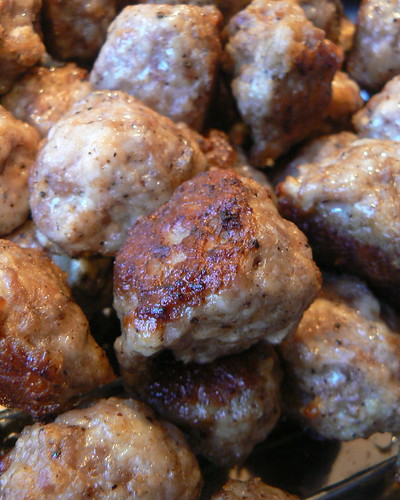
make meatballs (about 35 1oz portions) for the Office party
make mini bugers (AKA Sliders)
Or the ultimate in comfort food, the Thanskgiving pie.
Have a Happy Thanksgiving and have fun cooking.
Cheers.
14 November, 2009
Thanksgiving in a Tube

27 October, 2009
Bangkok Brat

Chicken Thai curry sausage recipe
This episode is about an obsession with curry. Have you ever wondered how to take the wonderful flavors of curry and put it into a sausage? Dude, I have. After months of searching, researching, cracking and grinding, I have come up with not one but two curry sausage recipes, One for the enthusiasts, and one culled from the 'Ethnic' section at the local supermarket. But first let's take a quick look at how this current obsession got started.
It started a year ago. I gave a cooking school friend, Venique, some parsley parmesan sausage to sample. A couple weeks later she traded back some curry. Specifically four bags of curry that she had made with her parents who were visiting from Bangkok. While I don't encourage my boys to trade lunches at elementary school, if you are in a cooking class, bring something to share. Anyway this stuff blew away the paste I could get in a jar. What kind of exotic ingredients did they use? Before she could answer, I think there was quiz on dicing onion or sautéing skate, so the curry remained a mystery.
Fast forward to Labor Day this year. With the last bit of red curry, I made up a curry sausage for friends to try over the holiday weekend. It turned out pretty good, I dare say a blog worthy sausage. But wait, I can't blog about a sausage that uses a paste made by a friend with ingredients that I don't even know. How are you, the reader, supposed to make this sausage? I don't want the blog to be about lifestyle, sometimes I want to give you some news you can use. I guess I better find out how to make a Thai curry.
So I went to the library. I found Cracking the Coconut, by Su-Mei Yu. But before I could read the curry recipe I got distracted.
Coconut milk without the can.
In my fantasy restaurant kitchen, one tool I would NOT have is a can opener, so when Su-Mei Yu gave a recipe for milking coconuts on page 68, I ran out and bought some coconuts. I turned my enthusiasm up a notch by using my grinder attachment to process the meat.


Growing up I thought the only way to get pumpkin for a pumpkin pie was out of a can. I thought the same of coconut milk. The milk is not the water you hear sloshing around a fresh coconut, but fat and liquid extracted from the pulverized meat. You can even get great tasting milk from unsweetened flakes. Milking coconut is not the easiest process, but for the dedicated cook, it's worth it. 
It makes a wicked good coconut cream.
If you want to make fresh coconut milk from coconuts check out Su-Mei Yu's book. She also suggests saving the brown husks for the smoker, I'll get to that sometime soon. For using unsweetened shredded I'll give you a recipe in a few minutes.
Cracking the Coconut is great primer on Thai cooking. One of the most important points made in the book is that Thai food tastes best when made at home. Once you figure out how simple it is you may never go out for Thai again. Okay maybe that's a little dramatic, but I can't remember the last time I ate out Thai. I do rememeber the last time I made a Pad Thai for a midnight snack. I feel the same way about Mexican food, all dishes that I love to eat started as a meal made at home, so it makes sense that once you have a grip on the ingredients, the food should be easy to fix at home. Restaurants are left for when you want to take a ride on the merry-go-round. Oh boy I'm getting off track here, Back to the curry.
I cross referenced curry recipes in several books. One worth mentioning is Hot Sour Salty Sweet by Alford and Duguid. I like this book for its description of the different cultures and cuisines of SW Asia and how they are related. In general all the books agreed on the ingredients for red curry, for the sausage I choose to focus on the following ingredients:
Dry red chiles
Garlic
Lemon grass
Fish sauce
Galangal
And a few spices from the cupboard: Cumin, Coriander and white pepper.
With the exception of galangal, you can get these ingredients at a plain old grocery store. But galanlgal is worth searching out, it is used a lot in Thai cooking. Galangal, galanga or in Thai, Kha, is a rhizome that's related to ginger. Most cookbooks I've read suggest that you can substitute fresh ginger for galangal. Now that I have had the chance to compare the two I think they may be cousins but not kissing cousins. Galangal has piney-peppery undertones that are sublime compared to the astringent ginger. In curry ginger will work but galangal enlightens. I scoured the southland for the herb and only found frozen, which seemed to work, I also have powdered from penzey's which I used for a long time but now have concluded it is not a suitable form for the flavor.
Fresh lemon grass is also a very important herb. Don't bother with the dry stuff. You can find it fresh at Asian specialty markets, or better yet remember it for your garden. I grew it for the first time this year and I was very happy with the yield.
Okay, let's get on with the recipes.
Hot side hot and cool side cool.
Lemon grass and galangal are rather fibrous plants that don't lend a nice texture to sausage. Instead of worrying about mincing and mashing I added them to the coconut milking process. So along with those ingredients here's how I made my coconut milk.
mise-en-milk
Blender
medium mixing bowl
rubber spatula
Fine mesh strainer or cheesecloth
1 cup/3oz/85g shredded unsweetend coconut
2 T/1oz/30g fresh galangal chopped
1 stalk lemon grass the white (bottom 6 inches) chopped
2 cups/16oz/450 ml boiling water
Combine all ingredients into a blender. Be careful blending hot ingredients, they like to explode. Blend for at least 30 seconds. Pour concoction into mixing bowl. Since the mixture is to hot to handle, stir/mash/message the pulp with a rubber spatula. Do this for two minutes. Strain the milk into a clean bowl pressing out every drop. It should taste very peppery lemon-grassy and coconutty sweet. Refrigerate.
Next I worked on the dried peppers.
15 dried small peppers, stems and seeds removed,
soaked them in warm water for 10 minutes, discarded water, put peppers in the blender, added maybe 1/2c/4oz/110 ml water, and pulverized. Be careful this time because the peppers are spicy hot. pour into bowl and set aside.
Spice mixture
2tsp/8g white peppercorns
1tsp/2g whole cumin seed
1tsp/2g coriander seed
2tsp/14g salt
Toast the cumin and the coriander in a dry skillet if you're feeling natty. Combine spices and salt and grind fine. Set aside.
The Bird.
I like using whole chickens (minus giblets) for making sausage. This recipe calls for two pounds (2lbs/ 900g) of chicken, which is what I got off of a 3-1/2pound Amish fryer. Use the bones and wings for stock. Grind the chicken then add the following:
the spice mixture
2tsp/8g fish sauce
1/2c/120g chilled coconut milk mix (if the cream and have separated use cream first, save remainder for soup.)
Pepper sauce to taste. I used half of my mixture (60g) and got a medium spicy sausage.
1 clove garlic minced
1/4c/20g fresh coriander leaf (AKA Cilantro) chopped.
Stir mixutre with big wooden spoon until is comes together and looks even. Stuff into sheep casings, or make patties or whatever.
That's should be enough sausage for 4-6 people.
I think that recipe is complicated but worth it. I will continue to tune it, so feel free to write in comments. But let's say you want the flavor or red curry but you don't have the time to swing around to a Asian food specialty store. If you find fish sauce and a can of coconut milk at your supermarket, I think you can get a decent curry sausage.
Supermarket Thai curry sausage
2lbs/900g Chicken, ground
2tsp/14g Salt
2tsp/ 8g white peppercorns
1tsp/2g whole cumin seed
1tsp/2g coriander seed
1/2tsp/1g/ cayenne pepper
2tsp/4g paprika
1/2tsp/1g ground ginger
2tsp/8g fish sauce
1/2c/120g coconut milk
2T/30g juice from a lime
1 clove garlic minced
1/4c/20g fresh Cilantro (AKA coriander leaf) chopped
Grind whole spices with salt and combine with all other ingredients, stir mixture until it comes together and looks even. Stuff into sheep casings or make patties.
I served my Bangkok Brat on a Labriola pretzel roll, with sliced tomato, mustard and a Thai cucumber carrot relish. the relish is dressed with fish sauce, sugar, salt and lime juice.
Thai Red curry, make it good, make it yours.
Cheers.
08 October, 2009
Taking Back Bacon
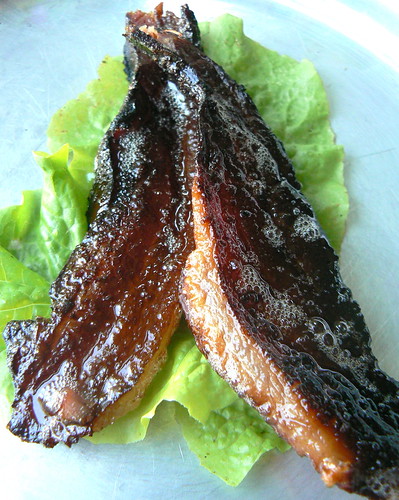
Home-made Bacon, The Perfect Gift.
I am ready to give you a recipe for bacon. What's that? You already have one? I mean curing bacon, at home, and I want to put the bacon hoopla to rest right now: You're going to make this with the cheapest piece of meat you can find and cure it with ingredients you have in the kitchen right now. And it's gonna taste like bacon which means it's gonna taste great.

Over the past few months I have cured nearly forty pounds of bacon. I have brined it, dry rubbed it, used nitrites, not used nitrites, forgot sugar, hot smoked, cold smoked, no smoked, and then fed it all to my family and friends. So far nobody has complained.
But let's forget get all that for a moment. I want to talk to you about bacon, I want to make sure you know it's okay to strip away all the hype surrounding bacon and pork belly right now. Long after the Baconfests and BaconCamps and the "Current culinary couture (that)centers on () pork and farmers," go away, bacon will still be here for you. I want assure you that you can find bacon happiness in your own kitchen. So go head and chuck the rock star chefs and their rumaki redux, cancel your mail-order of double applewood smoked artisinal bacon from Oklahoma, it's time to take bacon back.

Bacon is our American heritage. Mariani reports in the Dictionary of American Food and Drink that "Bacon has long been a staple of households because of a long history of pork consumption and hog butchery."
Indeed.
Waverly Root, in the encyclopedic tome, Food notes "America was built by pioneers and pigs. The covered wagons which started west, even before the Gold Rush usually carried seventy-five pounds of bacon per adult."
Now I could go on quoting sources stressing the historical importance of salting and smoking pork as a matter of preservation and economics, but I think that would miss the most important connection between us and bacon, the taste. Salt, sugar, smoke, and fat. Are you ready to make some bacon?

The Belly
As I have mentioned in a previous post the hardest part of the bacon operation is procuring pork belly. Grocery stores usually don't carry the cut so you got to be creative. I get mine from a small meat packer that sells retail, look for a packer in your area. You could check with your favorite pork purveyor at the farmer's market. Also stores specializing in Asian or Latino food are good bets. Last week I got pork belly already cut into 2-1/2lb pieces at CAM Asia Supermarket in Columbus. When choosing a belly go for the thickest you can find, that'll make the best bacon. At the meat packer I have to buy a whole piece which can be 10 to 12 pounds and I have written the recipe for that amount. In terms of price I pay 1.39/lb at the packer, CAM charged us $2.25/lb, the price will go up from there.

The Cure
Sugar, salt and belly and you got bacon, the rest is icing. But icing is good sometimes, no? I have come to favor a combination pepper mustard, coriander, allspice, and bay (AKA pickling spice)to cure bacon and ham. But really salt and sugar is it; I used to believe that sugar (especially for brining) was not necessary but after side by side comparisons, sugar balances the salt.
Another important ingredient is curing salt. This ingredient goes by different names such as Insta cure #1, Prague Powder #1, DQ Cure, and it is 6.25 percent sodium nitrite. You can get this stuff mail order, but I buy mine at The Spice House.
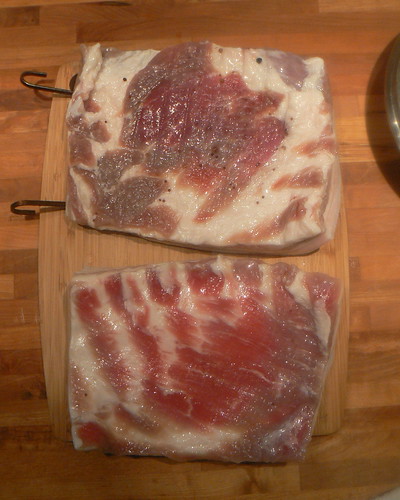
Top piece cured with curing salt bottom piece without.
I have no problem using this stuff, it contributes to flavor, color and it substantially increases self life. Plus, since I'm certified in food service sanitation by the state of Illinois, I can't recommend cold smoking meat without using nitrites. But, back to what I said in the beginning, do you have pink salt in your kitchen? Do you need it to make bacon? Let's move on.
There are two ways to cure bacon,
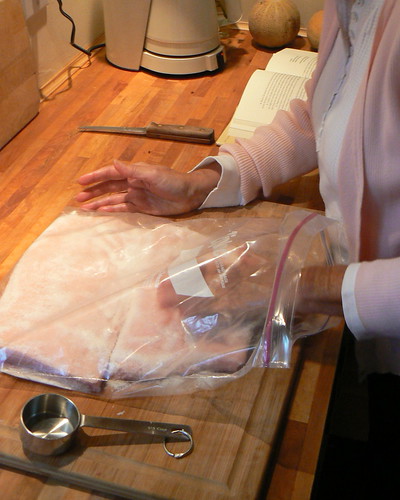
applying a dry rub
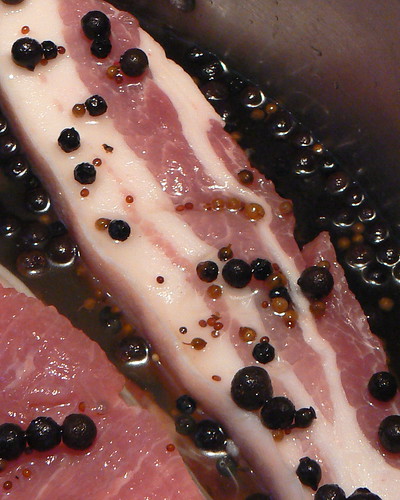
or pickling in a brine.
I've done dry rub lots of times it's quick to start and it doesn't take a whole lot of room in the fridge. The first bacon I made was with a recipe from Charcuterie which procribed a dry rub. But I have come to like the pickle because the cure time is shorter and the cure is more thorough than the dry rub.
The smoke
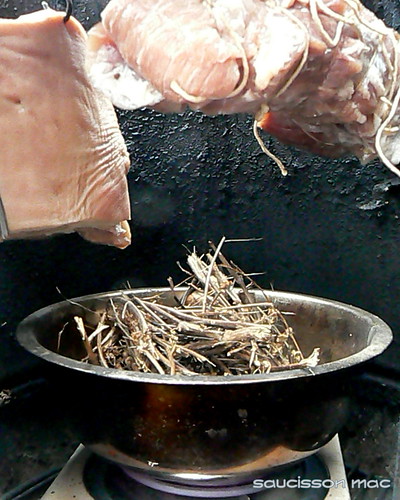
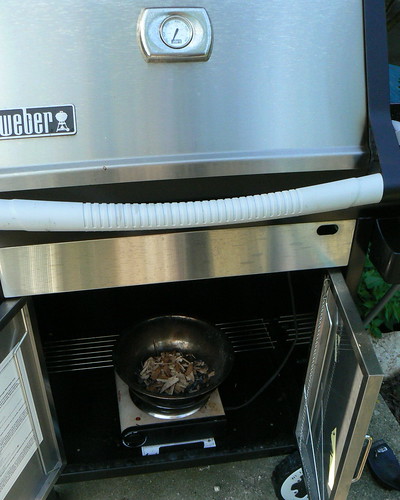

Smoke is a visceral obsession. It is an olfactory memory that has collected and compounded in the human being for millions of years. The smell stands for warmth, safety and prosperity. Taking in this memory welted to fat, salt and sugar connects us to all who have come before us. It's the smile at the corners of our eyes.
So, is it important?
If you have a grill of some type then you should be smoking bacon. I have smoked bacon in many different ways, and I have always come away with the same conclusion: I don't like making a big production out of it. Please understand I am not some sort of artisinal baconphile, I don't dial my recipe on single grains salt or handfuls of hand hewn sawdust or multiple days of cold smoking. Minor tweaks I cannot do. I'm big picture: Look like bacon? Taste like bacon? Too salty? For finishing bacon I like hot smoking. I set an fire in the grill/smoker at 250F and cook until the bacon gets to a internal temperature of 150-160F. In terms time, it's usually two hours. Get some wood chips from the hardware store, cut up any sort of hardwood that you may have laying around, Two hours of gentle smoke makes a fine bacon.


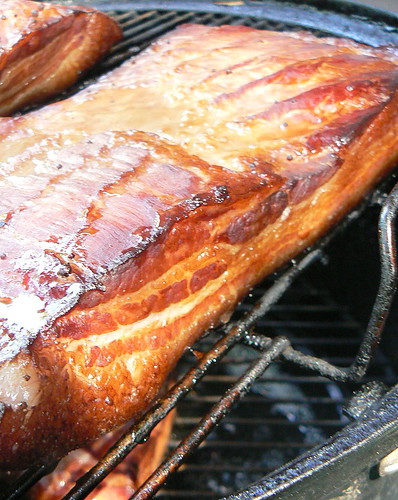
Bacon finished in the oven without smoke is a perfectly delicious endeavour. In England cured belly without the smoke is called green bacon.
The recipe for Bacon
1 pork belly 10-12 pounds, skin on
Brine:
5 L water
440g Salt
50g Curing Salt*
450g Sugar
Pickling Spice
16g Black peppercorns
11g Allspice
10g coriander
10g brown mustard seed
4 bay leaves
*You can substitute an equal amount of regular salt for curing salt.
Mise en Bacon: Find non-reactive container(s) to brine belly. Trim into manageable squares. Save scraps for sausage, lard, or just throw them in the pickle.
Combine water, salt, sugar and pickling spices(if using, remember they're icing) and boil for one minute. The brine needs to cool (Not in the fridge) to 70F.

Make an ice bath in the sink or use ice paddles to cool quicker. I made ice paddles by freezing water in one quart milk jugs.
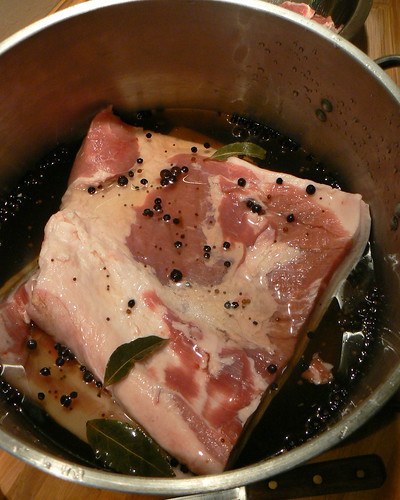
Immerse belly into cooled brine in non-reactive containers, refrigerate. Cure for three days.
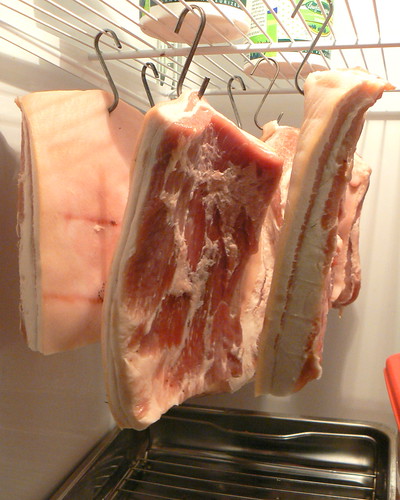
The bacon needs to dry before smoking. Pull it from the brine and let it rest on a rack or dangle for a day. The stainless steel hooks pictured above came from an IKEA pot rack.
When you are ready to finish the bacon heat Smoker/grill/oven to 250F. Cook bacon to Intemp of 150F. About two hours.
Allow the bacon to cool, but while warm remove the rind (skin). You can save the rind for flavoring soups or beans.

Once cooled wrap and refrigerate. You can fry some up now, but it tastes better the next day.
I can't tell you exactly when bacon goes bad, I have kept bacon (cured with nitrites) in my fridge for months. For the stuff cured with just regular salt I start noticing change after a couple of weeks. Therefore I recommend you freeze this bacon after ten days.
SO you got all this bacon what are you going to do with it?
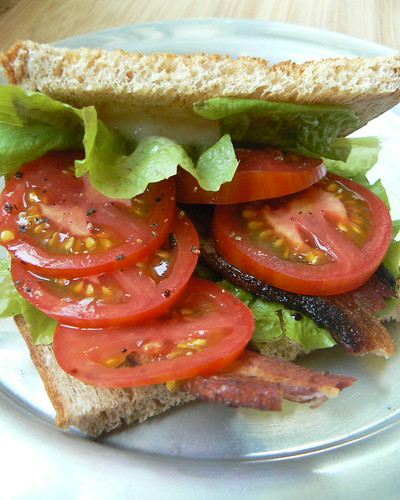
You could enter a BLT from scratch contest (or not)
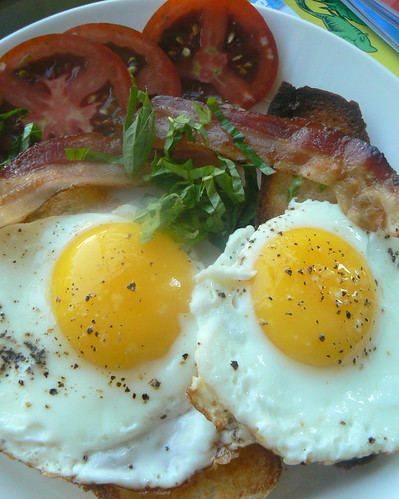
Eat it for breakfast,
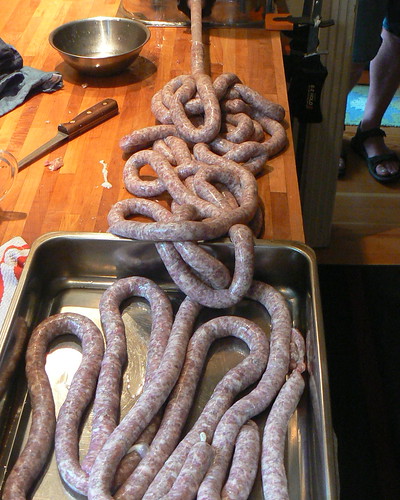
Or you can make bacon bratwurst.
Bacon works great in a supporting role too: Stews, beans, chili, meatloaf, pate, pizza, quiche. Bacon goes everywhere.

If you can't get you hands on pork belly, you can try a fatty piece of pork shoulder in the brine, I've done it a couple of times, it works well.
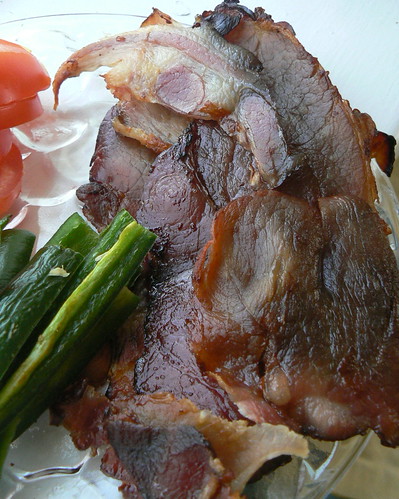
Whatever you do, make bacon, make it yours. If you have any questions please ask, I'm here to help.
Cheers.