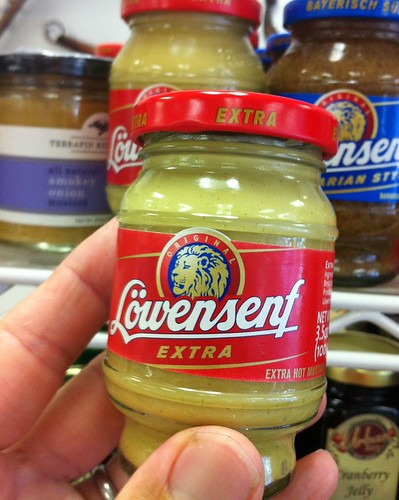
Dusseldorf Mustard, Try the original before trying the rest and you'll know what the fuss is about.
A couple of weeks ago the Chicago Tribune Featured on the front page of the food section a write-up on Dusseldorf Mustard. The sub heading teased "Move over Dijon, there's another strong mustard in the house."
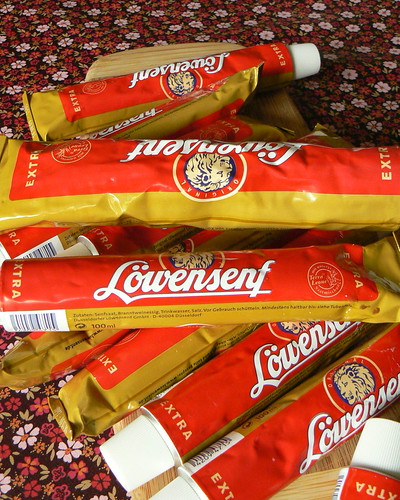
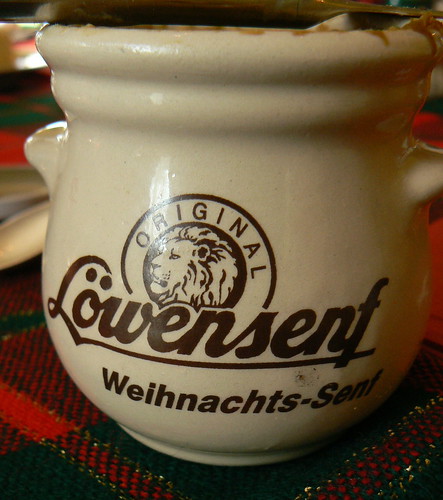
Oh boy I love Löwensenf the original Dusseldorf (prounounced DDorf)mustard. My brother, the one that lives in Germany, introduced me to the spicy stuff. Seriously side by side its prowess reduces most Dijon mustards to floury paste. I went though a phase stockpiling tubes of the stuff on visits to DDorf and Berlin.
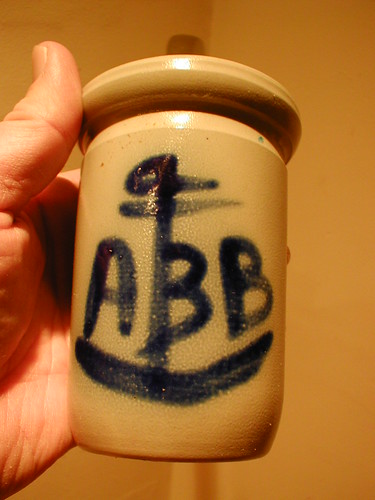
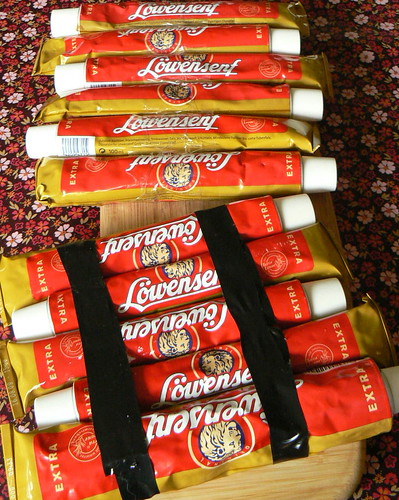
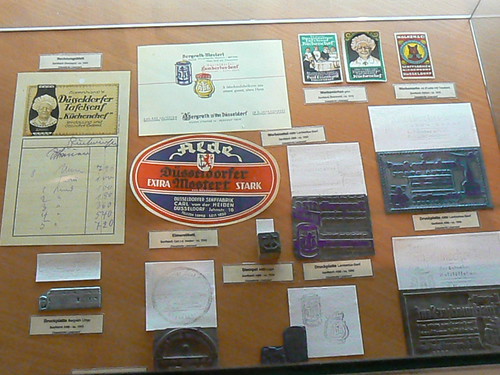
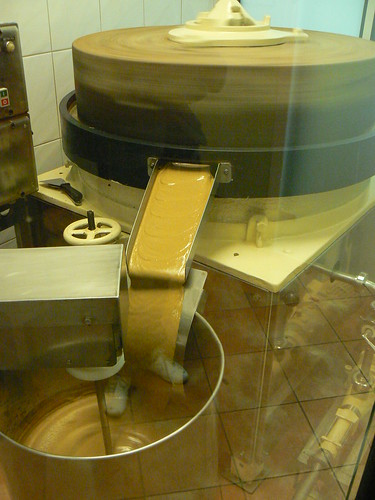
I went to the mustard museum in DDorf.
All slathered in mustard I was ready to sing some halleluahs as I dug into this article. It quotes chef Walter Staib of Philadelphia's City Tavern Restaurant. He correctly states "Dusseldorf has much better flavor than Dijon," and he goes on to assert the Dusseldorf mustard has a bold(ness) that's better for cooking. Testify.
Staib lamented that he had to change recipes in his cookbook, "Black Forest Cuisine" to call for Dijon, because the editors wanted a paste that was easy to find.
Huh.
The article then meanders a bit into to the puddle of European protected names. Apparently some folks around DDorf (which has been a mustard producing center for centuries) want to have an appellation for for their mustard. For the truly afflicted here is the application (PDF) in English and in Deutsch. Now Dijon mustard does not enjoy a protected status, but everybody knows what a Dijon should taste like, apparently the same cannot be said for our German sauce.
This is the spot where the Chicago Tribune got lost. If you are going to write about mustard you gotta know what it tastes like.
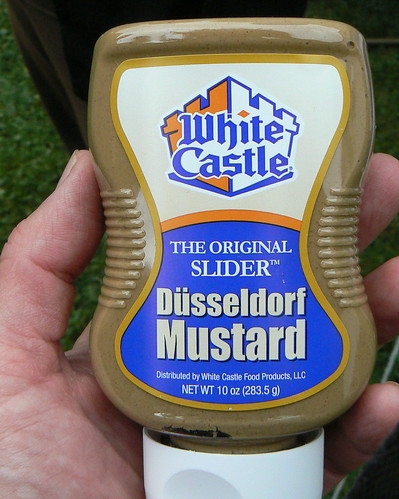
When Chef Staib said of the mustard "Close your eyes and (taste), you would think it was a very strong Dijon," he was not referring to mustard from White Castle.
Nor the mug mustard from Hamburg.
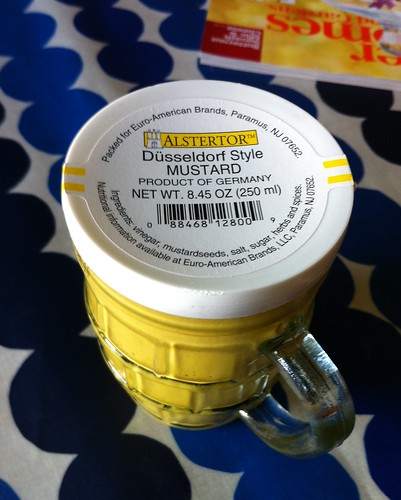
As a companion piece, the food section taste tested five Dusseldorf style mustards but managed not to procure the original Dijon slayer. If they had, I imagine the food section would have realized how uninformed the taste test was.
So why didn't they bother to try the Lowensenf? Hard to find? Well, no and yes. Here in one of the greatest food cities in the world, Chicago, there's at least three places to get your Dusseldorf senf fix:
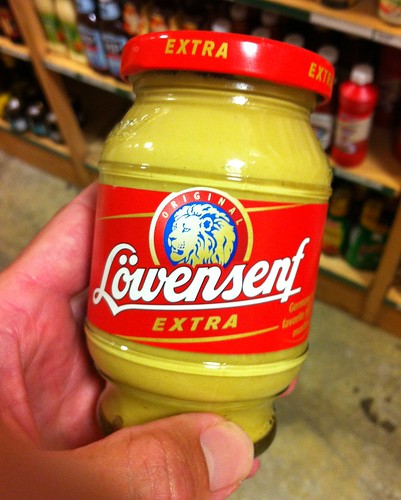
Cost Plus World Market in Lincoln Park, I suspect they have it at most locations, they have it online.
At Gepperth's Meat Market on Halsted, they stack em deep.
And I also called Gene's Sausage Shop, in Lincoln Square, they have it in stock.
And the hard part of finding real Dusseldorf mustard? Short shelf life. Like herbs and spices, All mustards lose potency with age. In fact DDorf mustard makers are supposed limit shelf life to no more than ten months. This can lead to limited quanities here in the states. But if you can find it get it because it's good.
This mustard controversy comes at a particularly sensitive time for me, Oktoberfest starts in just a few days.
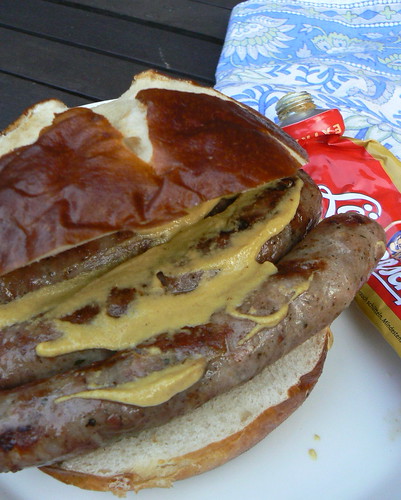
No sausage should ever be without mustard, and it's important that you make informed mustard choice. I'm here to help.
Cheers.
PS. Here's a hot dog video from a few years ago which includes a Dusseldorf Mustard demo. Enjoy!
19 September, 2012
Aint Cuttin the Mustard.

30 July, 2012
Snorkers for the Games.
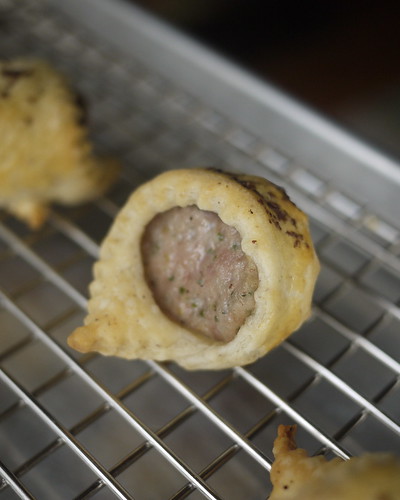
British (Newmarket style) banger recipe.
In America if you say Banger or Chipolata, you're considered a British sausage expert. So when I read a tweet from Britain's leading sausage expert about about some folks selling snorker snacks in East Anglia, I put on my sausage detective hat to find out more about these little lovelies.
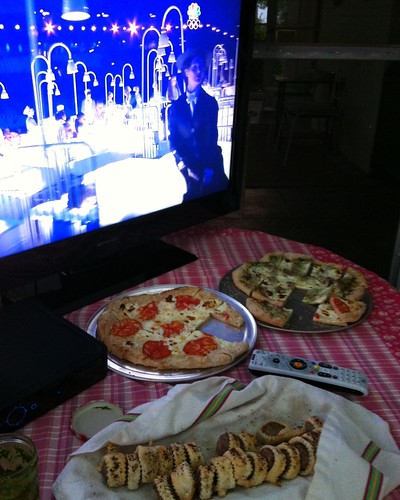
The Olympics and the Industrial Revolution.
Last weekend's Opening Ceremonies for the summer games had a narrative of the advent of the industrial revolution that started in the UK and spread around the world. This age of mechanization was not limited to steam engines and sweaters, it also included food. And of course one of the easiest foods to put on the production line was sausage.
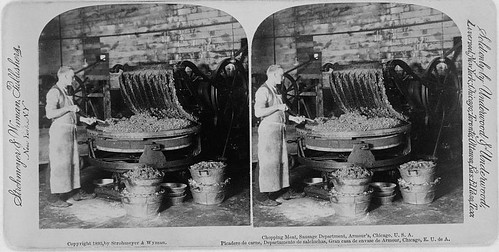
While industrialized food has given rise to miracles like Modernist Cuisine, and imporved many foods that I love such as mustard, beer and Parma ham, the change in how food is processed and distributed has also caused some folks to stare at their plates and ask, what is real? This is especially true when it come to sauasges.
In the UK sausages aquired a reputation of being tasteless links stuffed with so many cereal fillers and water that they exploded upon cooking, hence the term bangers. American sausage maker Bruce Aidells wrote that it was the horrible sausages he had while living in Britain that inspired him to start making his own.
But as with all generalizations, this one doesn't capture the whole story. Before and after the Industrial Revolution small producers made quality sausages to little fanfare. And over the past few years seeking out these regional specialties has become a new pastime for many.
Great Britain a country of sausages.
Stephen Plume AKA the Sausage King, is one such person. Through his website SausageFans UK, the Sausage King documents his trips around Britain in search of the finest sausages. According to the King, there are over 500 different types of sausages in the UK. And indeed there are many unique sausages in the British Isles. Last November I wrote about the Cambridge sausage in honor of British Sausage Week. In that post I also noted the the Cumberland sausage had gained a PGI (Protected Geographical Indication). In May the King reported that another sausage The Lincolnshire, had failed to gain protected status. One of the reasons giving was that there were to many versions of the recipe.
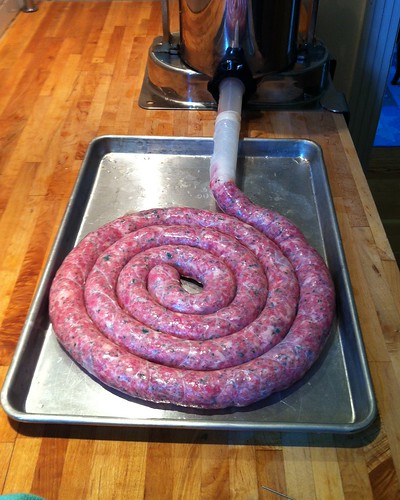
Boosters of an East Anglia banger hope to avoid the fate that befell the Lincolnshire. In the town of Newmarket two rival butchers have agreed to a truce in an effort to gain PGI status for their unique link, The Newmarket Sausage. Sausage makers Powters and Musk's each claim to have made and continue to make the original Newmarket Sausage since the 1880's. Since I live nowhere near Newmarket, I can't say which purveyor makes the better link, let alone, who made the original. However I did find a PDF of the Newmarket PGI application, so I can try making my own.

Yeah but why? In a word, Snorkers.
Recently one of the Sausage King's tweets led me to the website of Big Skies Food Company. The organization does one of the most important services known to humanity, encasing meat in pastry. Among the products they offer is a Snorker Snack. Snorker, I soon read, is a slang term for sausage, maybe refering to its likness to a snorkel. Wikipedia reports that it may have originated in the Royal Navy. After an exhaustive ten minute search of the Internet I concluded that snorker reference is valid and Big Skies is the first and only going concern that sells a Snorker Snack.
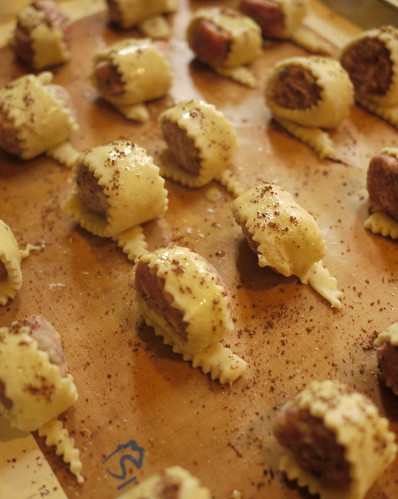
I should mention that this toodoo unfolded because I was looking for a British themed nosh to take to an Opening Ceremonies potluck. Well I didn't dare try to crack the proprietary formula of the Big Skies snorker, so I looked for another sausage of the region. That's when the Newmarket Link dropped in my lap.
Newmarket (East Anglia) style Sausage
1000g Pork
16g Salt
4g black pepper
2g white pepper
pinch nutmeg
3g fresh thyme
15g fresh parsley
zest from half a lemon
100g fine bread crumbs
100g of water or ale
hog casings.
Cut the pork into cubes and toss with the salt, refrigerate as time allows, 2 - 24 hours. Grind through coarse plate. Using the paddle attachment or a big wooden spoon beat in spices then herbs and bread crumbs. Add the liquid as needed to keep the mixture going. Continue to mix until uniform, about a minute. Stuff into hog casings.
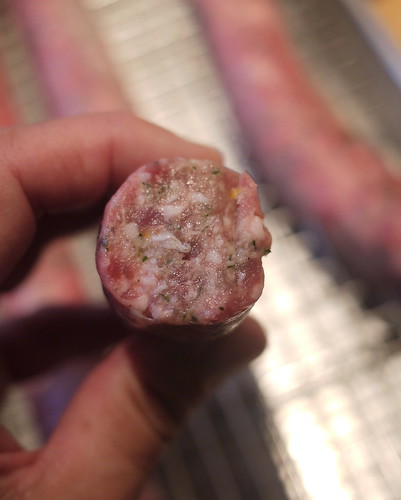
Now would someone from East Anglia spot this banger as a Newmarket? Probably not, But I did conform to the PGI description, except for the part about making it near town.
The PGI (find link above) states the sausage must be coarse ground, no smaller than a 3mm plate. The sausage may contain only the following ingredients:
Pork (only shoulder or belly)
Salt
Black pepper
White pepper
Thyme
Parsley
Nutmeg
dried lemon
Sulphites (as a preservative)
Sodium phospahte (as a binder)
Bread, rusks and water may make up no more than 30% of the product.
I think I nailed it.
For the Snorker Snack I found this lovely shortcrust recipe in the Guardian. It calls for mustard powder, I used ground brown mustard seeds.
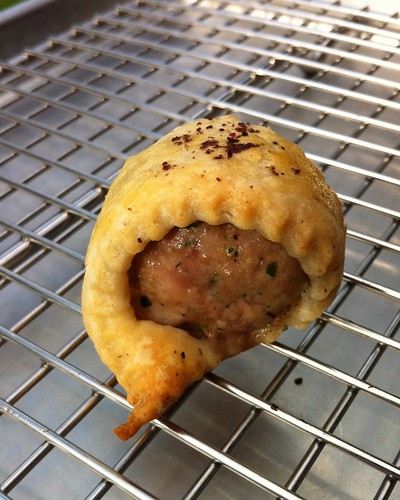
Pork crackling top the Big Skies Snorker Snack, I was fresh out so I substituted sumac. At the party I served the snacks with a coriander chutney, but with the leftover bangers I grilled them and ran them through the garden, American style.

Cheers.
19 July, 2012
Salsicca Barese: A Sausage Mystery.
Barese sausage recipe.
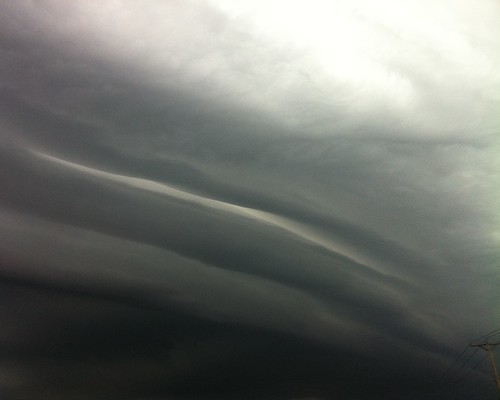
What a summer for weather huh? A few Fridays ago we decided to roll over to West Chicago because Bonne Femme had a Groupon for the town splash pad, but then this storm boiled up. To wait out the storm we rerouted to one of our favorite family pastimes, wandering around grocery stores. We stopped at Caputo's in Naperville.

I picked up some 00 flour for our "Friday Night Pizza Party,"
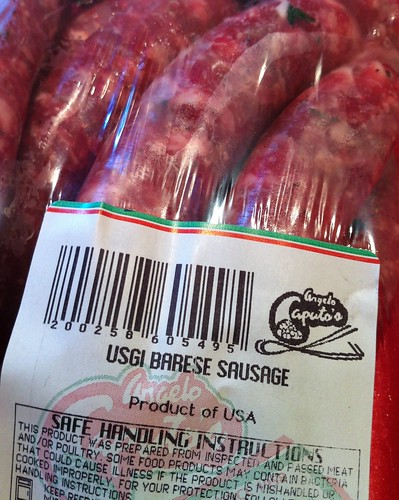
And Bonne Femme picked-out some Barese sausage from the meat case.
Barese sausage? As Doug famously said to Kalon on this season's Bachelorette, "Whoa, Check yourself."
I had thought this mythical beast only existed at the finest little Italian grocery on Grand Ave, Bari Foods. And then to pile surprise upon surprise, this delicious link from Caputo's has lamb in it. My belly is happy but my brain is flummoxed, what is a Barese sausage?
View Larger Map
According to Wikipedia Bari is the capital city of the province of Bari, which is in Apulia(Puglia). It's a large port city on the Adriatic. The town seems to have a rich but not quite tourist worthy history, but no mention of any particular sausage, zoom out to the provence and in the hills you'll see lots of vegetables, wheat and sheep, but no ricettas for salsiccia Barese.
Back at the library, my requested sausage book by Aidells shows up and I spot my first glimpse of a "Barese-style sausage" recipe. Aidells states this sausage is popular in the Italian Neighborhoods of New Orleans. Who knew that they had Italians in the Big Easy? According to New Orleans Online "The majority of Italian immigrants in New Orleans are from Sicily and started to arrive in large numbers in the 1880s..." Sicilians, make a note of that. Beyond the typical Italian sausage seasonings, Aidells' recipe calls for parsley and cheese.
Parsley and cheese? As Joey Lawrence famously exclaimed on the TV sitcom Blosssom, "Whoa!"
I wrote a Parsley and Cheese recipe in 2007. It was an ode to a sausage I chomped while living in Brooklyn. In pork shops across the borough they sold large coils of the sausage stuffed in lamb casings, and skewered to be grilled.
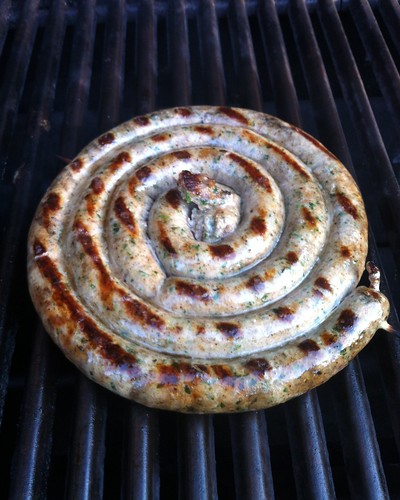
Was this the missing link? Were the parsley & cheese sausages from back east Barese? In Brooklyn I don't remember the purveyors calling them Barese, and I never asked what part of Italy they where from....
I want to fuse this link. I find another Barese sausage recipe on the website Sonoma Mountain Sausage. It calls for parsley and cheese too! And there's lamb in it like the Caputo's version. The recipe also calls for 'conserva,' not a typical sausage ingredient, and there's no reference to the recipe source. I need corroboration.
At the library I grab every book I can find on Bari, the region, Italian food, and sausage. Here's what I learn:
Salsicca refers to any fresh raw sausage ment for cooking.
Salume (Salumi pl.)refers to all meat products salted and cured (Think Charcuterie)
Salame (Salami, insaccati) is a type of Salume (Think Saucisson)
A Sulumiere sells salumi at a salumeria. (say that three times fast)
But still no Barese sausage.
In "A Mediterranean Feast," Clifford A Wright devotes ten pages to sausages and reports a recipe with cheese as coming from Sicily. So the parsley & cheese sausage comes from Sicily? That would tie in nicely with the New Orleans reference. I think I'm getting somewhere but no closer to Bari.
But wait, on his website (not in the book) Wright gives a recipe for Zambitta a beef and lamb sausage with cheese and parsley from Apulia! Is it the Barese sausage? I don't know, the ingredient list looks ok, it calls for hog casings, but whatever, and you coil it. But I can't find a mention of Zambitta anywhere other than Wright's website.
Meanwhile back on Grand Ave, in Chicago, I remember the day in 1998 that I said bye to Frank and Ralph as I left for NYC. I asked them where was a I going to find a place like theirs in the Big Apple? "Huh?" was the reply I got.
Years before I had been introduced to the Barese sausage. As a young lad I was amazed by this exotic item, never before had I seen a thin sausage sold by the length. How is diferent from the regular Italian sausage, I had asked. "Well there's parsley in it and no fennel." Huh. Both the Bari and Caputo versions of the Barese have parsley, are stuffed into lamb casings and have NO cheese. I really like the lamb in the Caputo sausage.
Hmmmm...I work out a few batches at home.

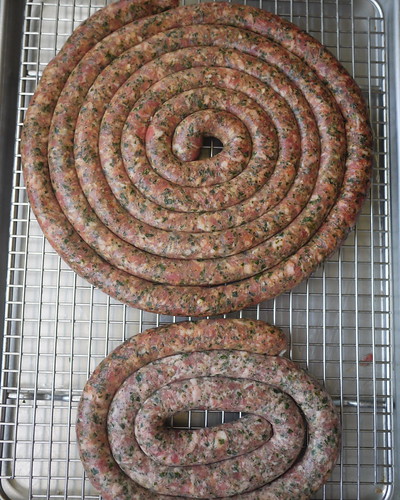
I liked the second batch best, here's the recipe:
Pork and Lamb Sausage (Salsicca Barese-esque)
Per 1000g Meat
70% Pork shoulder cubed
30% Lamb shoulder cubed
16g Salt
8g Black pepper ground
7g Fennel seed ground
7g Paprika
4g Coriander ground
20g Milk powder (optional but nice binder)
40g Fresh parsley chopped fine
10g Fresh garlic mince
100 ml white wine
lamb casings.
Method:
Combine and toss cubed meats with salt, refrigerate 2 hours to overnight if possible.
Grind meats through course plate. Place the grindings in a mixing bowl and beat in the spices and optional milk powder using the paddle attachment on a stand mixer or a big wooden spoon. Stir in the herbs and wine. Continue to beat until the mixture comes together, about a minute.
Stuff in lamb casings, coil and skewer. Ask for lamb casings at any meat counter that makes sausage, I usually ask for "a few arm lengths." Don't worry is they want to charge $13/lb, twenty feet of casing will be around $3.
So the mystery continues, but it's tasty sausage.
Cheers.
Further reading:
Bruce Aidell's Complete Sausage Book, by Aidells and Kelly
Delizia!: The epic history of the Italians and their food, by Dickie
The Oxford Companion to Italian Food, by Riley
A Mediterranean feast : the story of the birth of the celebrated cuisines of the Mediterranean, from the Merchants of Venice to the Barbary Corsairs : with more than 500 recipes, by Wright
14 July, 2012
Know your chicken.
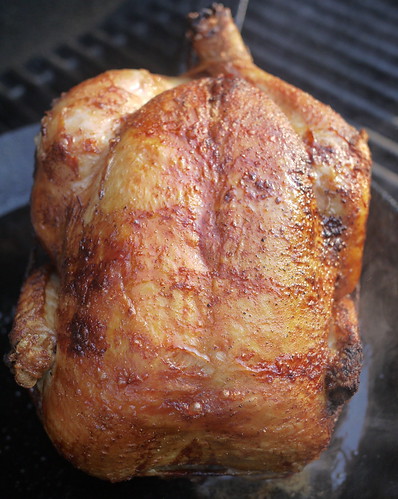
Pan roasted chicken.
Crispy skin is the best part of a chicken, now you can do it at home. I don't know if this method is an up and coming trend, or a fad of the nineties, but pan roasted chicken is my favorite way to cook a chicken. It's pretty easy and it only requires an outdoor grill, an iron pan and a chicken.
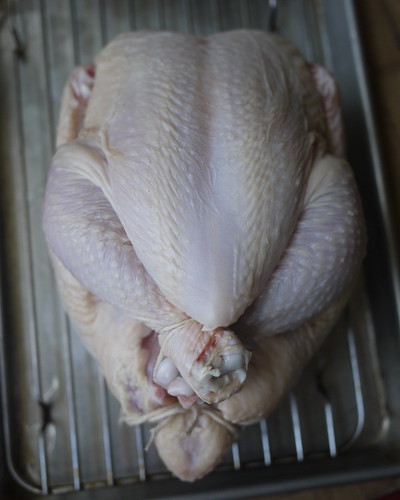
Prep the chicken. Pick a poulet from you favorite poultry provider. I get a WOG (that's pro talk for "Without giblets")from the grocery, about three and a half pounds. Remove the wishbone, the wing tips and brine in a six percent solution (that's 60g salt per liter of water) for one to four hours. After the brine time rinse your bird then bind it with a measure of kitchen twine. Rack and rest it in the fridge uncovered, several hours would be nice to allow the skin dry, until you are ready to cook.
Start the grill.
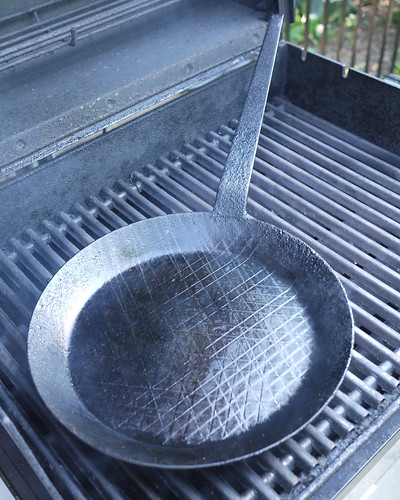
Select a nice iron pan and place it on a cold grill. Warm everything up. I use a gas grill, but use anything in which you can easily maintain a temp of 450-500F for an hour. I don't recommend doing this inside, it's going to get smoky. While waiting for things to heat, baste your bird with a neutral oil and season with a few grindings of white pepper.

Place the chicken on the pan, close the cover and set the timer for twelve minutes. No peeking.
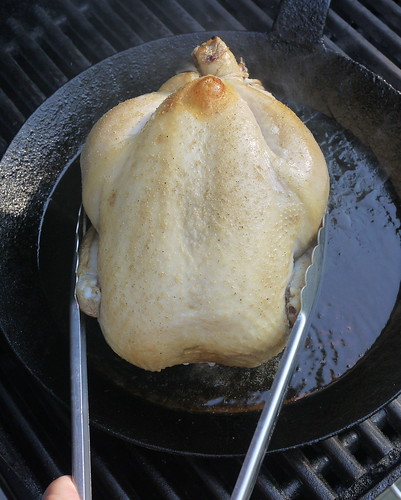
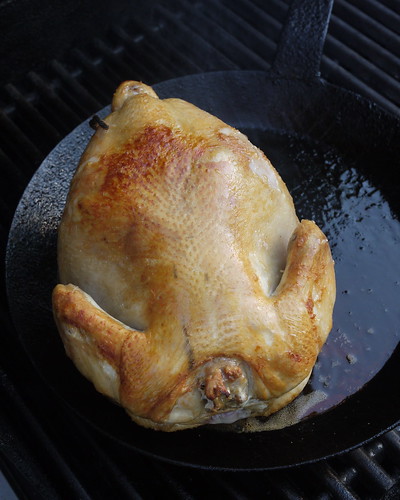
Flip the bird. Using tongs (a spatula is handy too) gently turn the bird onto it's tummy. Cover and put ten minutes on the timer.
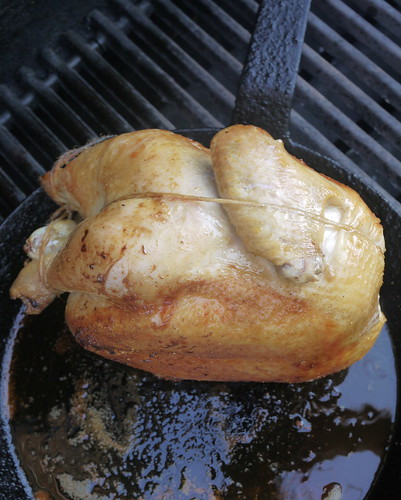
Carefully balance the roaster on its side, let it go for ten minutes.

Now put ten minutes on the other side.
And time to eat. Let it rest for ten minutes, uncovered, then carve.

Eat this.
Cheers.
27 June, 2012
Finocchio!

Pickled fennel recipe.
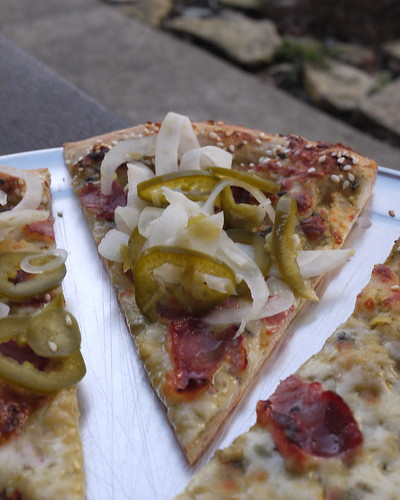
I had a couple instances this week where I recommended pickled fennel to folks, it's a great garnish for pizza or grilled sausage. I just whipped up a batch, here's how it goes.
First find the fennel. Here in the midwest grocers sell fennel bulbs as Anise, I don't know why they call it that, it's fennel. Select a tight bright one with happy fronds. This root great roasted, or grilled, and it's good as a substitute for carrot in a white stock or fumet. But nevermind that we're gonna pickle it.
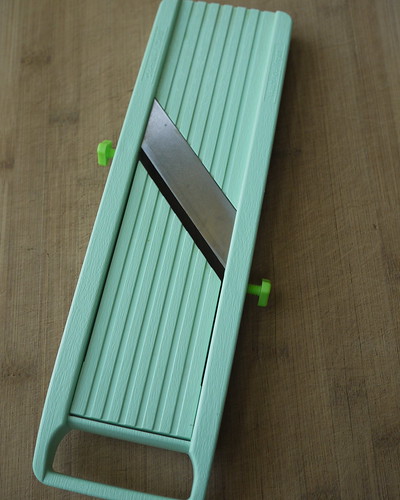
Next slice the fennel. Slice it thin. Use whatever you have, knife, Cuisinart, but I like the Benriner mandoline. They're about 25 bucks on Amazon, or at a well stocked Asian market and they are worth every penny.

Now for the pickle, 2-1-1. I hear ratios are popular and easy to remember, Chef only had to tell me six times before it sunk in. 2 parts vinegar, 1 part water, 1 part sugar. Start with this ratio for just about anything you want to pickle: Cherries, watermelon, cucumbers, or peppers. Once you done it a couple of times, you can adjust the the formula. For Fennel, already a little sweet, I use less sugar.
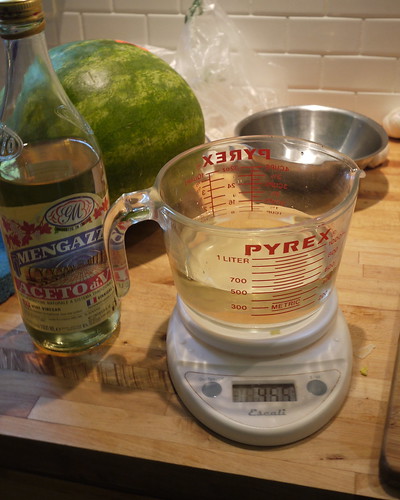
Add some salt (3-5%) and bring it pickle to the boil.
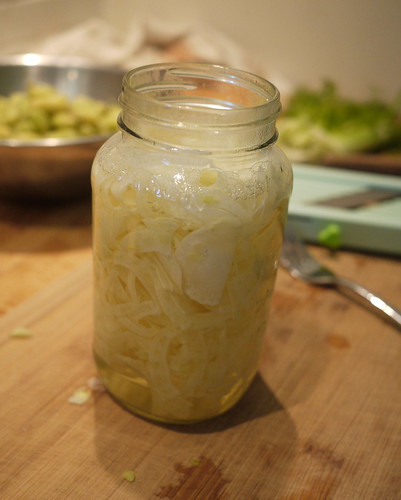
Pack the sliced veg into some vessel and pour the hot liquid to cover. Allow to cool and refrigerate, let it pickle overnight.
here are the quantities I used:
1 bulb fennel
300 ml white wine vinegar
150 ml water
100 g sugar
18 g salt
Cheers.