Showing posts with label chorizo. Show all posts

04 April, 2012

The salsa is on the inside.

Chorizo Verde

Green Chorizo Recipe.

Chorizo is Spanish for sausage.
Chorizo

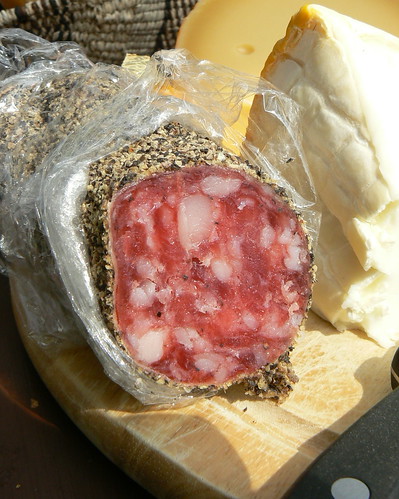
In Spain you say chorizo and you may get a dry sausage that's seasoned with their famous smoked paprika (Pimentón).
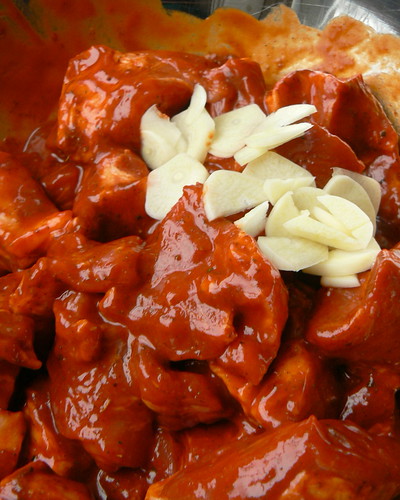
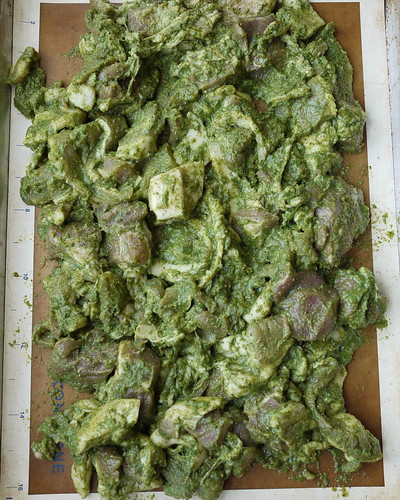
Marinating pork for chorizo

In Mexico, chorizo means fresh sausage made from pork marinated in a chile paste and cooked loose.
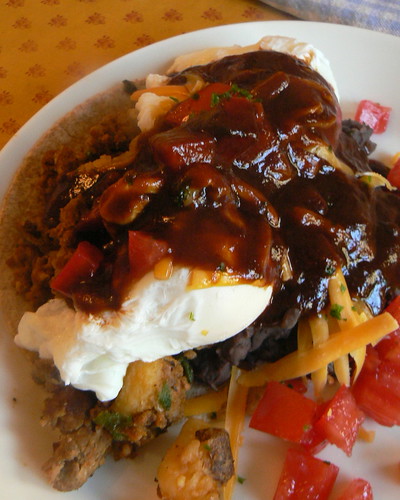
Huevos Rancheros

In America it's mostly known as the stuff that comes in plastic tubes that's salty, and greasy but tastes great with eggs.

There are places around Chicago that sell homemade chorizo, but this story is about making your own homemade chorizo at home.

I first wrote about Chorizo for a Cuisine of Mexico class I took at Kendall. I made chile pastes and described all the different herbs used to make a beautiful sausage. During the research I stumbled across a description of green chorizo. In her guide of the market at Santiago Tianguistenco, Diana Kennedy wrote:

"Chorizos are practically synonymous with the Toluca area...About twenty five years or so ago, green chorizos began to appear. There are some excellent ones, but because they are usually made in small quanities, they are more difficult to find. They are seasoned with herbs, greens, chiles, and sometimes tomates verdes. Many others are seasoned with commercially ground pumpkin seeds and spices, while those to be avoided at all costs are prepared in bulk in local packing houses, artificially colored and packed into plastic casings."

From this I was hooked, a green sausage! I had to make it, and it only took three years.
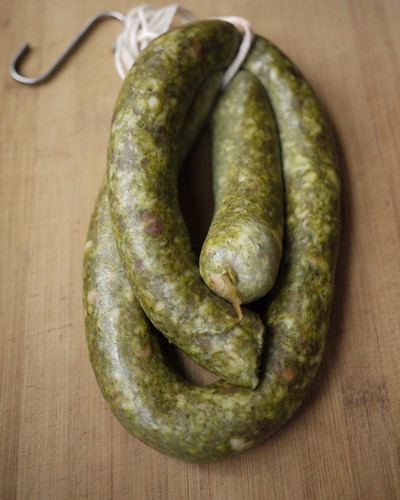
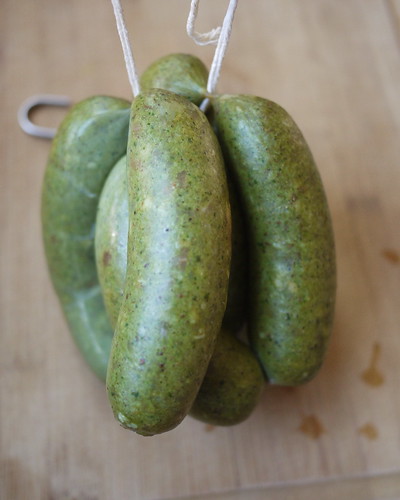
Chorizo Verde batch 3 after hanging a couple of days

I started thinking about chorizo verde again when I wanted a green sausage for St. Patrick's Day. I decided to keep my banger rooted in Irish flavors, so the Mexican verde would have to wait. Then I spied an account of a fruitless green chorizo quest in The Chicago Reader, by food writer Mike Sula. Touched by the writer's plight, I now felt it my civic duty to to come up with an authentic green chorizo recipe.
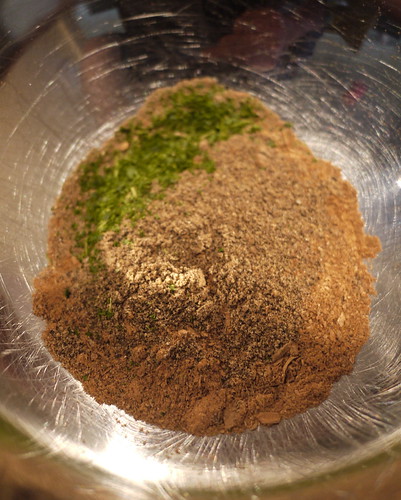
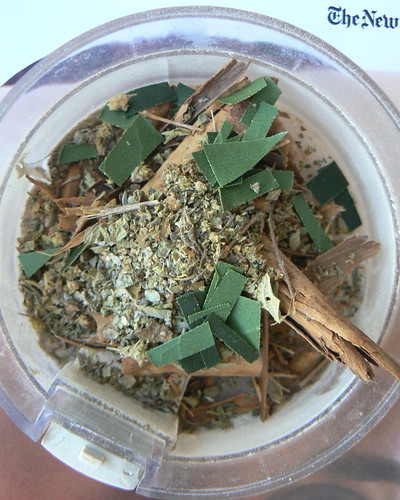
Canela, black pepper, bay

Recipe Construction

For this sausage my basic premise was it's coarse ground meat seasoned with a chile salsa (paste).

Here's the all star line up for the green paste:
Untitled
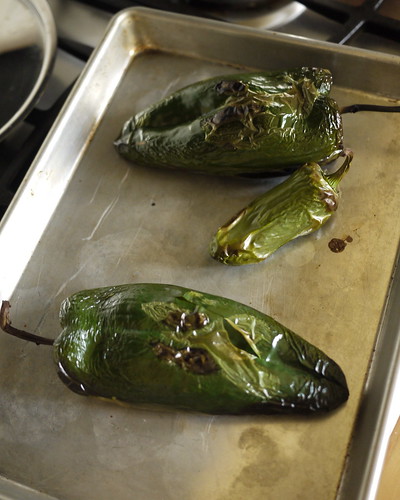
poblanos y jalapeños

Untitled
Cilantro

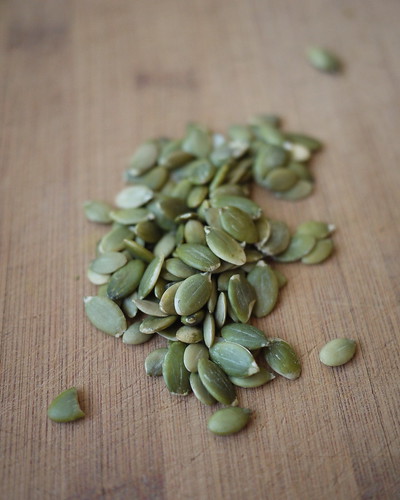
pepitas verdes
Pepitas

Untitled
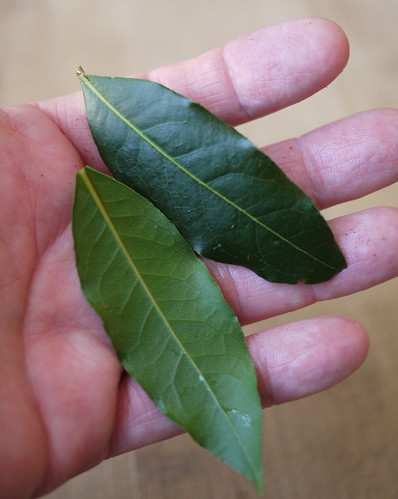
Laurel

Other bit players include:

Untitled
Canela

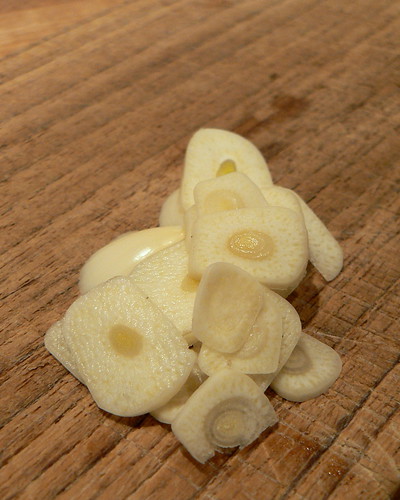
garlic
Ajo

I could have included spinach or spinach powder, but it felt like a color crutch, besides, I wouldn't put spinach in my salsa verde. I also considered tomatillos, but I didn't think they contributed enough in color or flavor.
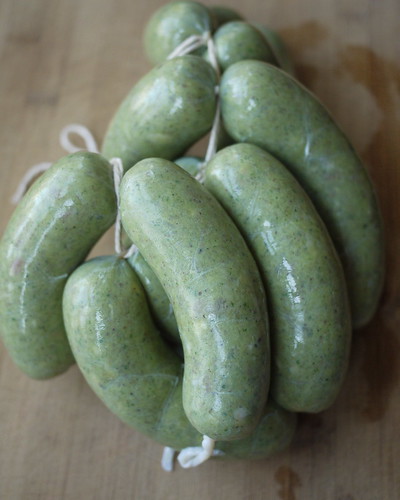
Chorizo Verde batch 1

I made four batches of Chorizo. For my first attempt I imagined an futuristic ultra-hip chicken chorizo. The pale meat made a nice palette for a green link, and playing on a riff from the Modernist Cuisine cookbook, I tried Xanthan Gum as a fat replacer

Untitled

It tasted great, but the texture was that of scrambled eggs, Nice but not what I wanted for this chorizo verde. So much for being hip.

With pork shoulder back in the batter's box the next two batches were about process:
Untitled

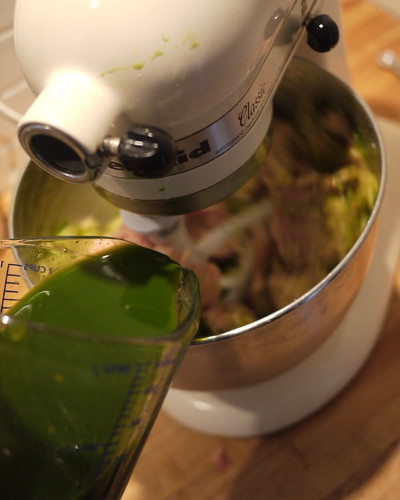
Added in green,

Untitled

vs. marinated green.

I liked the effect of the "added in green" when I made the St. Patrick's banger, but it wasn't working here. Still not loose enough. Marinating in a green paste for 24 hours is the way to go.

Chorizo Verde

Per 1000g pork shoulder (you can use up to 20% fat too) cut into small cubes.

3 poblano chiles
2 jalapenos (or serrano for a zestier sauce)
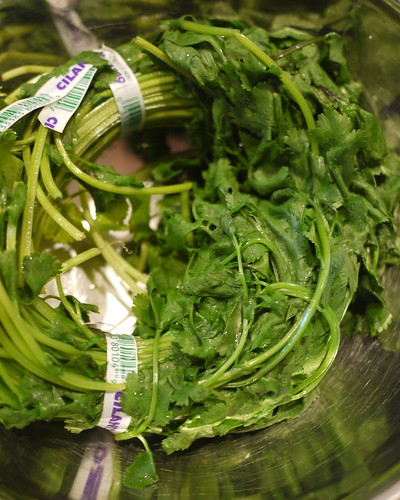
3 bunches of cilantro (about 300g)
30g garlic peeled and chopped
25g pepitas (green pumpkin seeds) ground
17g Salt
2 fresh bay leaves, chopped (see notes)
7g black pepper, ground
6g canela (see notes)

30ml tequila or vinegar (see notes)

To make the salsa verde:
Untitled

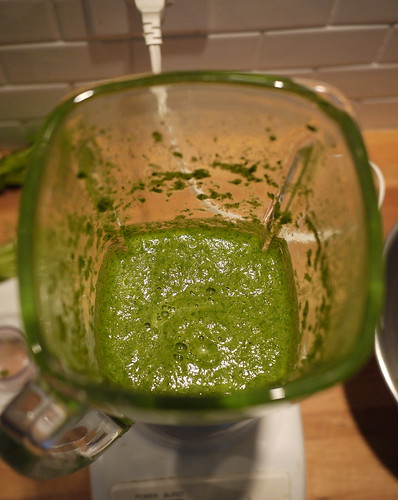
Blanch and shock the cilantro. Remove the lower stems and place leaves in the blender.

Roast the chiles till charred on all sides then remove stems and seeds. Put them in the blender with the cilantro.

Put the rest of the ingredients (except the pork) into the blender.

Puree.
Untitled

It's okay to add a little water to get thing going, but you want to keep it kinda thick. let the blender run awhile.

Pass the salsa through a strainer to rid it of any nasty bits. Toss the verde with the with the cut up pork and let it sit in the fridge for 24 hours.

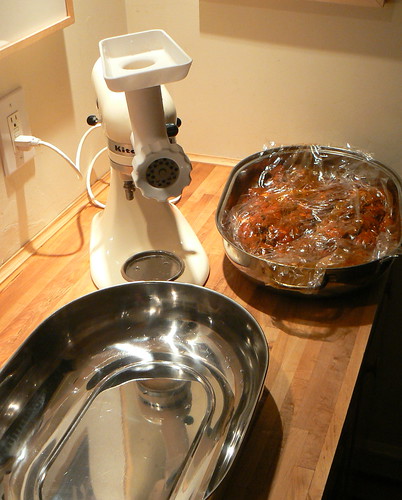
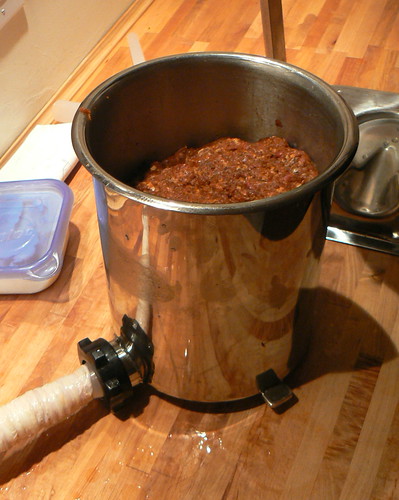
The next day grind the green mix through a large plate. Stir to achieve a uniform pitch, then stuff into casings or roll in plastic. Let it hang in the fridge for a day or two and the green will deepen, especially in the natural casings.
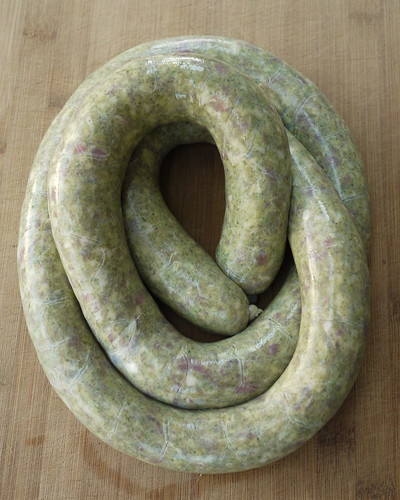
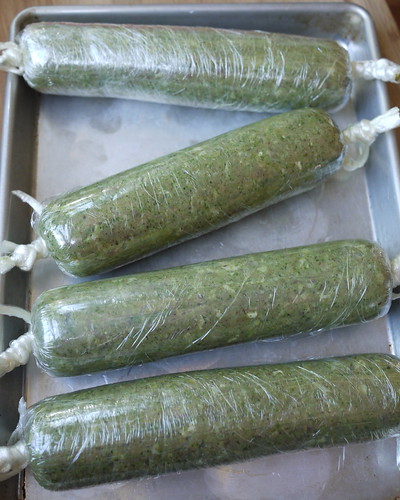
Chorizo Verde batch 3

Chorizo Verde batch 2

Recipe Notes:

Fresh laurel (bay leaf) is a must. If you don't have your own tree (and you should) check Latino markets or your finer gourmet food shoppes, don't bother using dry, just do without, it's okay.

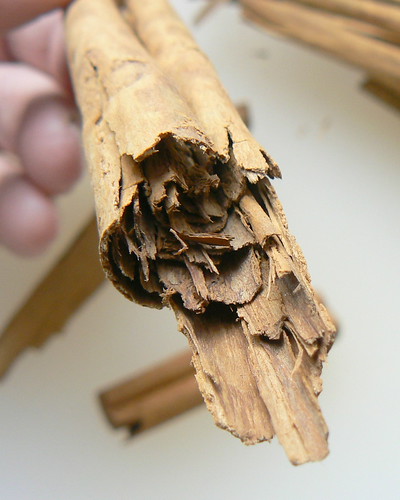
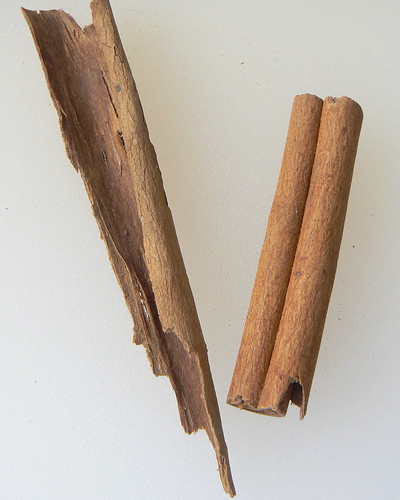
Canela. While most of the Western world is hooked on cassia, Mexico is one of the largest importers of true cinnamon from India. The nuanced flavor is worth seeking out again at a Latino market or at a spice merchant. Use you cupboard cinnamon if you must, but go easy on it.

Vinegar or tequila. Traditionally vinegar is a part of chorizo, and I made three batches with it at various percentages. I decided to make a fourth with tequila. I found the vinegar made the texture mealy, the acid hindered browning (the Malliard recaction), and not to mention it's pungent. I settled on tequila because it punches up the flavors without being overbearing.

I had a lot of chorizo verde on hand, so...
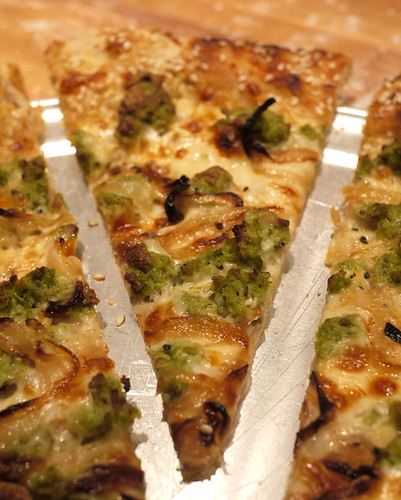
Pizza w/ caramelized onion, chorizo verde, yellow miso chantilly slick

I put it on pizza,

Chorizo verde hacis, eggs, mustard greens beurre blanc, radishes

had several renditions of chorizo hash and eggs,
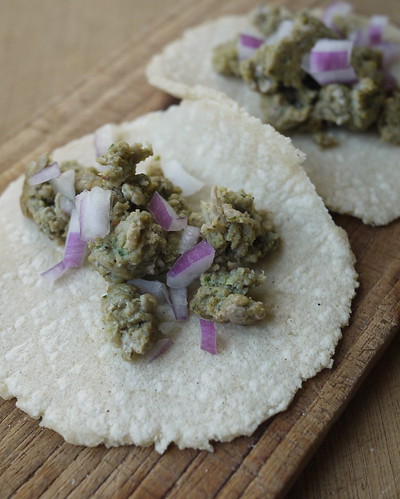
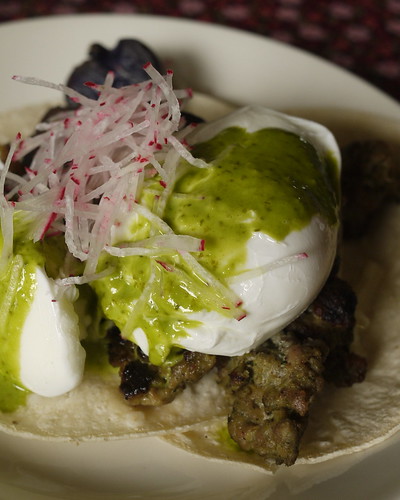
Chorizo verde tacos

but it's simply the best on a tortilla.

Cheers.

Further reading:

Chorizo (rojo) by Saucisson MAC

My Mexico : a culinary odyssey with more than 500 recipes by Diana Kennedy. pgs.211-217

"The Elusive Green Chorizo" by Mike Sula

Recipes sources:

Green Chile Chorizo by Rick Bayless

Chorizo Verde from PROCURADURÍA FEDERAL DEL CONSUMIDOR (PROFECO)

Chorizo verde estilo Toluca from Chef Uri

For the really bored:

A paper on: Determination of some physicochemical characteristics from chorizo verde, a traditional sausage from Toluca, México,(In Spanish, PDF) (Abstract In English)

And finally, no Chorizo post of mine is complete without the Chorizo Song, by my friend, John Novak.

19 January, 2010

Mincing Sausage

Huevo Rancheros con freekeh

The sausage that wasn't, EZ Chicken Chorizo and Freekeh Week.

I wanted to kick off the year with a championship worthy chitterling sausage but instead ended up with The Great Andouillette Wreck. I'll spare you the details but the link will take you to the pictures.

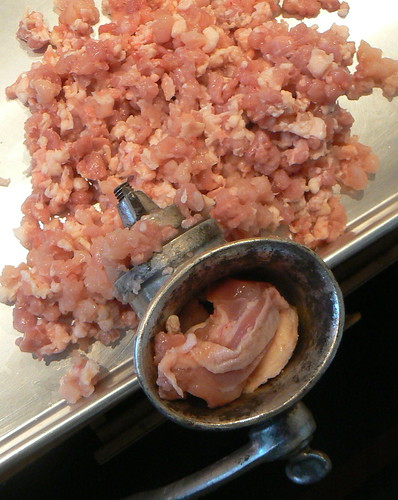
At the same time the family had to eat so I made up some Chorizo. I wanted something not too spicy so the boys would eat it. From a whole chicken I got about two pounds of meat and I ran that through the mincer.

Mincing chicken for chorizo

Now if you don't have your great-grandmother's Universal #1 meat grinder with mincing plate, you can use a Kitchen-Aid grinder attachment or just do it by hand. Here's a link to my instructions to make sausage without a grinder.

Here's the quantities

Chicken Chorizo

2 lbs (900g) Chicken minced
10 g salt
5 g summac*
15 g Paprika
1 g dried marjoram
1 bay leaf
1 g canela (Ceylon "Mexican" cinnamon)**
20 g (4 cloves) garlic minced
5 g dry milk powder (optional)
15-30 ml cider vinegar

Nicely grind salt and spices and mix into chicken. Continue to stir while adding garlic, milk powder and finally vinegar. Allow mixture to rest a few hours before cooking in a skillet.

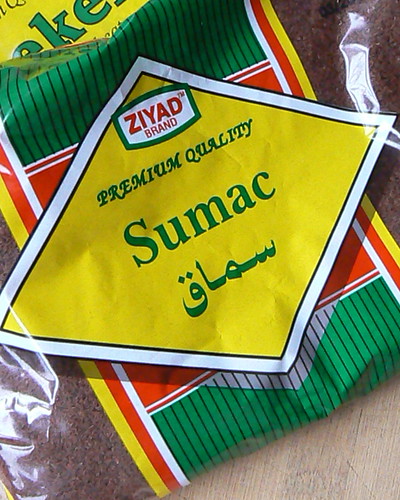
Sumac
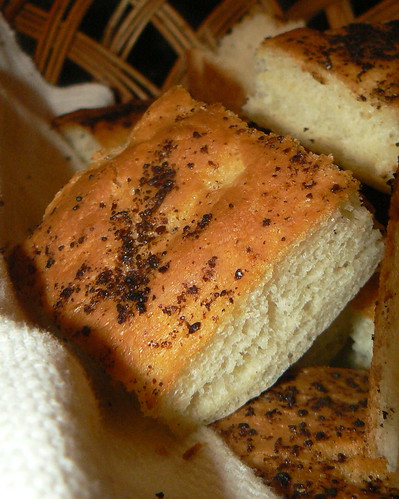
*Summac is a spice I just started playing with, it's used a lot in Middle Eastern cooking and it's part of the spice blend, za'atar. Straight out of the bag, the flavor gives hint of Nacho Cheese Doritos. I have also been using it on top of focaccia. I will be using it a lot more.

Focaccia with sumac

Anyway it's processed with salt so if you don't use it in the chorizo recipe up the salt a bit, I usually salt 7 g (1 tsp flake) per pound of meat.

**Canela - "Mexican" cinnamon, true cinnamon, Ceylon cinnamon, NOT cassia. I talk about the differences between Canela and what we Americans call cinnamon in another post about Chorizo. Find canela at a grocery that specializes in Hispanic items or visit your favorite spice merchant. OR use the brutish cassia that's in the cupboard, just use a little less than called for in the recipe.

Since I wanted this chorizo to be kid friendly it's pretty mild, feel free to jazz it up. Over the past week we have had this sausage several different ways, but my favorite way is cooked up with potato and onion for breakfast.

Freekeh Week

Freekeh Week

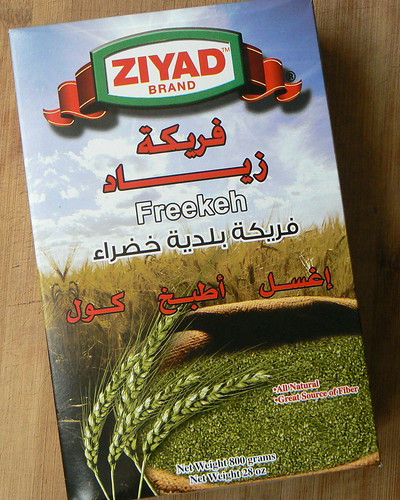
By Thursday of last week, Bonne Femme figured out it I was putting freekeh into all of our dinners. I love the smoky flavor of this roasted wheat (click on the picture to see a list of what I made), BUT this stuff is full of rocks and it really needs a hard sort. I spread it out on a baking sheet and go through it grain by grain. I so far have bought two packages of freekeh each having about the same percentage of debris. I will investigate further.

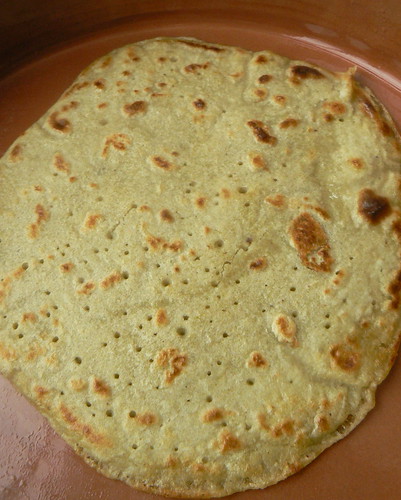
In the meantime I came up with a great recipe using it ground up: Freekeh tortilla.

Freekeh Tortilla

This is a somewhere between an actual tortilla and a crêpe.

Yield about six

70g /2.5 oz/ 1/2 cup ground freekeh*
70g /2.5 oz 1/2 cup AP flour
4g / 1/2 tsp baking powder
Salt
Water
Oil for cooking

Combine the dry ingredients with enough water to make a pourable batter(a cup or more). Using an oiled non-stick pan, cook the tortilla like a pancake.

Freekeh Tortilla in the skillet

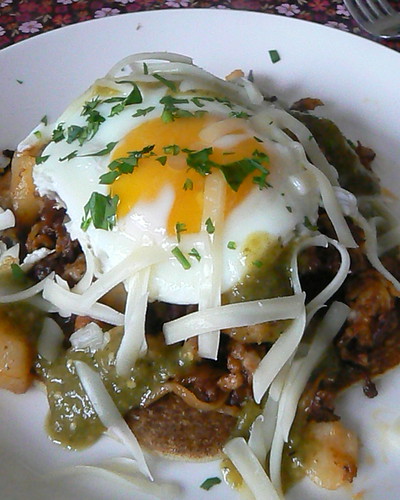
I used this savory flat bread for huevos rancheros (picture at the top). I think it's worth the hassle.

*What do I mean by hassle? Grinding freekeh. I used spice grinder to pulverize the freekeh and a fine sieve to sort it out, re-pulverize un-sifted bits, etc.

Most gluttonous gluttony coming soon, did someone say snails?

Cheers.

25 February, 2009

Chorizo

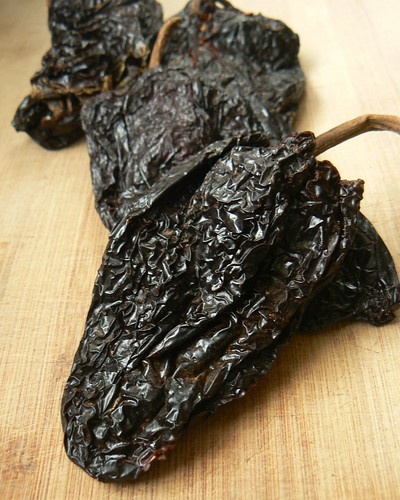
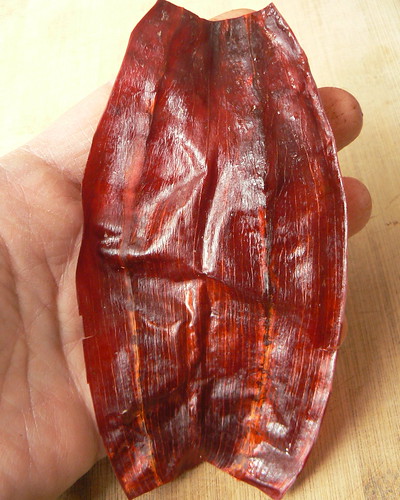
Ancho

Recipe for Chorizo.

What better way to learn about culture and food than by eating sausage. In today's episode, we take a little trip South of the border as I try to understand how two cultures came together to make this magical mixture, chorizo. Olé!

Chorizo is Spanish for sausage, and there are many kinds of chorizo ranging what we know as fresh chorizo, to Chorizo Verde, to a dry cured Spanish chorizo. In America we are most familiar with the fresh Mexican rojo (red) chorizo, a salty spicy sausage that comes in long pakages. My favorite way to eat it is for breakfast fried up in a hash with peppers and potatoes. But the store packaged stuff is nasty, I want a recipe that uses few ingredients and tastes like chorizo.

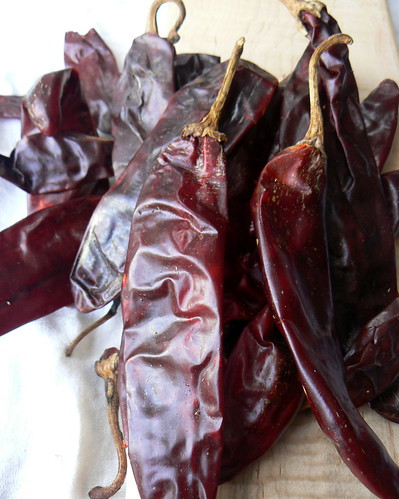
Chile Guajillo

Chile Paste and the Aztec Blender.

The primary flavor for the chorizo is the chile (or chilli, or chili, or pepper). While I have made sausage in the past by just using powdered peppers, I believe you get a better flavor by preparing a chile paste from dried peppers. Here's how I learned to do it in school:

Guajillo split and clean

Remove the stems and seeds from the chiles.

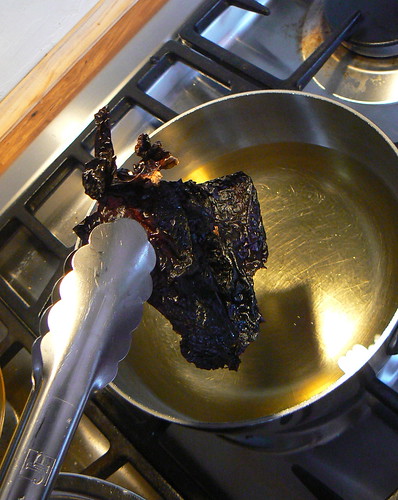
Blanching ancho in oil

Blanch them in oil. No more than five seconds (really three), or they will they will burn, you'll get the hang of it. Make sure the oil is no more than 350F. Strain and save the chile oil.

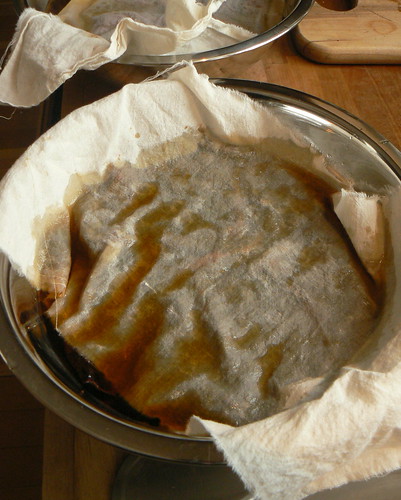
re-hydrating chiles

put the blanched chiles in hot tap water, cover with a paper towel and let them hydrate for ten minutes.

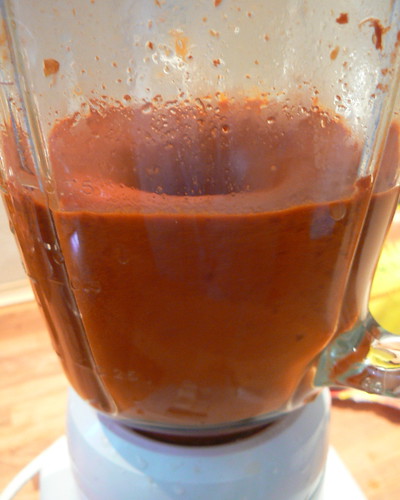
Blending chile ancho paste

Discard the hydrating water, put the chiles in a blender, add about a cup of water (I started with 3oz (90g) of chiles) and puré. Strain the mixutre.

If you watch a lot of Rick Bayless, you might have noticed that the blender gets used a lot in the Cocina Mexicano.I have often wondered how did this stuff get made before the modern miracle of the West Bend. The Matate made it all possible. It's the three legged grinding stone that for centuries has been in the center of the Mexican kitchen. Up until the turn of the twentieth century a woman in the campesino would spend a third of her life grinding food (corn mostly) on the Matate, "The bitter black stone." Check out ¡Que vivan los tamales!: Food and the Making of Mexican Identity, by Jeffrey Pilcher for a history of the Mexican kitchen.

The meat of the matter.

So you've got your flavorful chile paste what about the meat? Before the Spanish showed up, there wasn't much meat in the Mexican diet, just turkey, iguana, insects and of course fish. With the conquistadors came Mestizo cuisine, a mixture of the two cultures, the Spanish introduced pork, beef and chicken along with rice, garlic and onion. The Spanish also introduced the art of making sausage. I read in Diana Kennedy's book, My Mexico: A Culinary Odyssey with More Than 300 Recipes, "Cortes introduced cattle and pork into the valley (Toluca, famous for sausage...(and) Spanish techniques for sausage making and pork curing naturally followed."

Okay so we have the Mexican Spanish food connection. Let's illustrate it in sausage.

Spices

Herbas de olor.

Like the bouquet garni of French cooking, Mexican cuisine has amomatic herbs that serves as a seasoning base: Bay, thyme and marjoram make up the herbas de olor. In some Mexican groceries you can find these three fresh bunched together. I found these herbs in several Chorizo recipes so we will use a little bit. I would recommend trying to find fresh bunches, but in my final recipe I ended up using some dried. I also used some Mexican oregano (because I had some), if you don't have it I wouldn't worry about it too much. Mexican Oregano is not a part of the oregano/marjoram family it's actually related to Lemon Verbena.

Canela - Cinnamon

Canela - Cinnamon.

I have known for some time that what we typically call cinnamon is actually cassia, but I hadn't known the difference. In addition when I read recipes calling for "Cinnamon, preferably Mexican" I figured there's a third version from South of the border. Mexican cinnamon is actually true cinnamon and it's imported from Asia. The difference between cinnamon and cassia is dramatic: Cassia is blunt, cinnamon is light and sophisticated. Don't get me wrong, I wont be giving up my cassia for my cinnamon buns, but using Canela, true cinnamon, in moles or chorizo makes a world of difference.

Marinating pork for chorizo

I made up two chiles pastes: guajillo and ancho. Bayless calls the guajillo the "workhorse" of Mexican cuisine, but I would guess the ancho is the most widely used. The guajillo gives beautful color, the ancho provides rich undertones, along with the spices and some garlic, I marinate the pork for an hour.

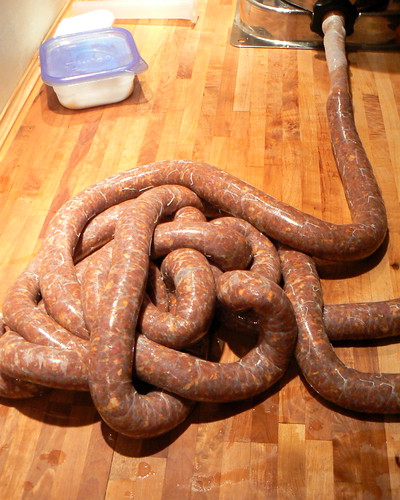
I made several batches using various combinations of ingredients, I even did a batch with added fat,but I wanted to keep things as simple as possible so I left out the added fat. In all I made about ten pounds of sausage over the past four days.

Ready to grind Chorizo

Ready to stuff Chorizo

Chorizo loganzia

Here's the recipe:

450 g (1 lb) pork shoulder cubed
60g (2oz) Chile paste (I used 50/50 guajillo/ancho, see above for paste instructions)
2 cloves (10 g) of garlic minced.
8 g (1 teaspoon) Salt
4 g cinnamon (for cassia use less, see above)
2 fresh bay leaves minced
1 g dried thyme
1 g dried marjoram
1 g dried Mexican oregano

15 ml (1 Tablespoon) Cider vinegar

Combine cubed pork, chile paste, and garlic. Process salt, herbs and spices in a spice mill and add to mixture. After a rest, run the mass through a grinder. Kneed it adding the vinegar until it starts to come together, about one minute. Stuff into hog casings for that loganzia look.

Chorizo is cooked without a casing, use it for breakfast or for stuffing peppers or for whatever. Enjoy. I gotta get to class.

Cheers.

03 March, 2008

Chorizo, chorizo


Chicken chorizo hash for breakfast.

Did you read the previous post where I suggested getting a whole chicken? Did you get one? Did you make stock? Did you stuff the legs with Swiss chard and cheese? Some people may call it an obsession, but I just call it a good habit. I bought another bird, made stock, some "chikin" fingers for the boys, and... What's that? Ma are you comin' to visit? Well I got a chicken breast what should we make?

Around here we love whippin up something good for breakfast. I am particularly partial to any menu with the words huevos and rancheros on it. I figured with the leftover chicken I could whip up some ranch style hash with chorizo.

Chicken Chorizo

720 g (1lb 80z) Chicken cubed
125 g ( 4 oz) Bacon diced
8 g Salt
7 g chile powder*
5 g paprika
3 g black pepper
1 g Mexican oregano
1 clove
Pinch of cinnamon
10 g garlic minced
Vinegar (15 ml) and water (30 ml) as needed

*The chile powder plays the star roll in this sausage so use something good. I had some New Mexico powder and I ground up a guajillo. Check out Penzeys or the Spice House for your chile needs.

This is best started the night before so that the chicken has a chance to marinate. Grind the whole spices in a mill and combine with everything else except the vinegar and water in a large bowl. Rest it in the fridge overnight. The next morning run it through the meat grinder. Stir the ground mixture adding the vinegar and water so that it starts to come together. Fry it up in a pan with some red potatoes, some onion, a poblano pepper and presto! hash. Serve with homemade corn tortillas and poached eggs.

For more chorizo fun, check out this video of Novak and his ode to Chorizo:


Spring is coming.

¡Salud!